

Last Updated on April 5, 2026
Double-pane windows are a key feature of modern homes, offering energy efficiency, noise reduction, and long-term savings on heating and cooling costs. These windows work by trapping a layer of gas, typically argon or krypton, between two panes of glass. This layer acts as insulation, keeping your home comfortable and reducing energy bills. Despite their design, homeowners may notice fog, condensation, or water trapped between the panes over time.
Moisture between double-pane windows is more than an aesthetic concern. It indicates a failure in the window seal, which can compromise insulation and energy efficiency. If left unaddressed, it can lead to higher energy bills, drafts, and even mold or structural damage in extreme cases. Understanding the causes, effective solutions, and preventive strategies is essential for protecting your home and maintaining the value of your windows.
Why Moisture Appears Between Double-Pane Windows
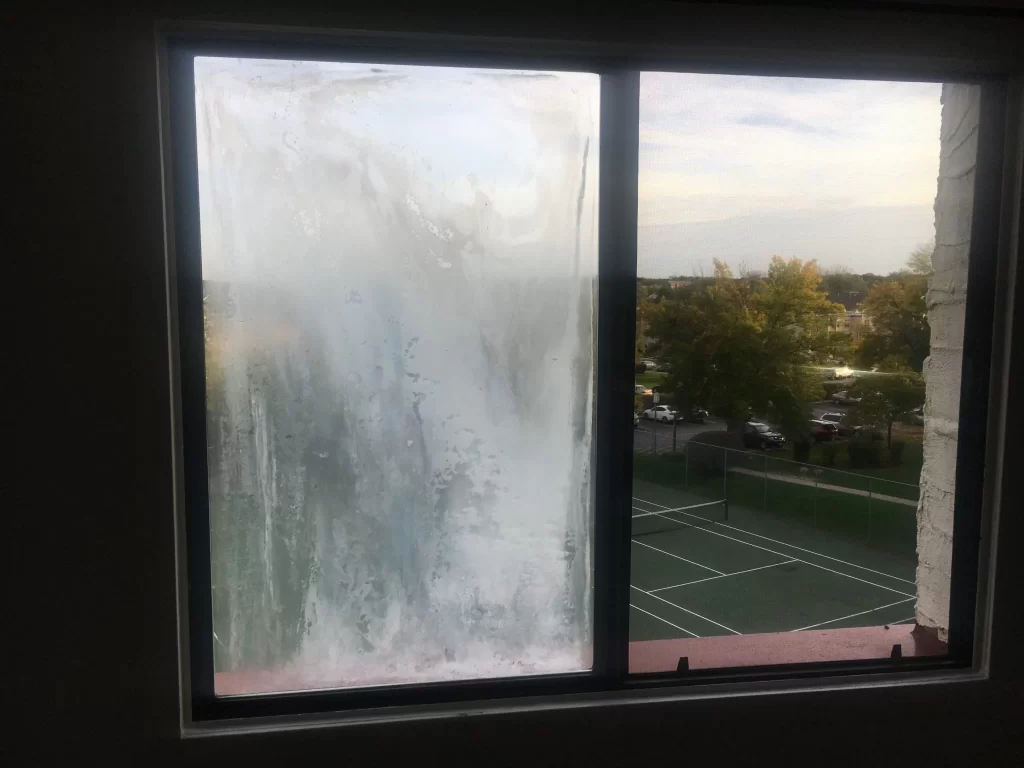
Double-pane windows are manufactured as sealed units to prevent air or water from entering the space between the panes. When condensation appears inside the glass, it is a clear sign that the hermetic seal has failed.
The seal can fail for a variety of reasons. Windows naturally age, and most double-pane units experience seal degradation within 10 to 20 years. Harsh environmental conditions, such as prolonged exposure to extreme heat, heavy rain, snow, ice, or high humidity, can weaken seals faster. Physical damage, whether from storms, impacts, or improper handling during installation, is another common cause.
Manufacturing defects or improper installation may also contribute to early seal failure. Once the seal is compromised, air and water vapor enter the space between the panes, creating fog, condensation, or frost patterns. Over time, this trapped moisture may also lead to corrosion of metal spacers or discoloration, further affecting the window’s appearance and performance. Learn more about the causes and solutions in our Window Seal Failure guide.
Signs That Your Window Seal Has Failed
Before attempting any repair, it’s essential to confirm the problem:
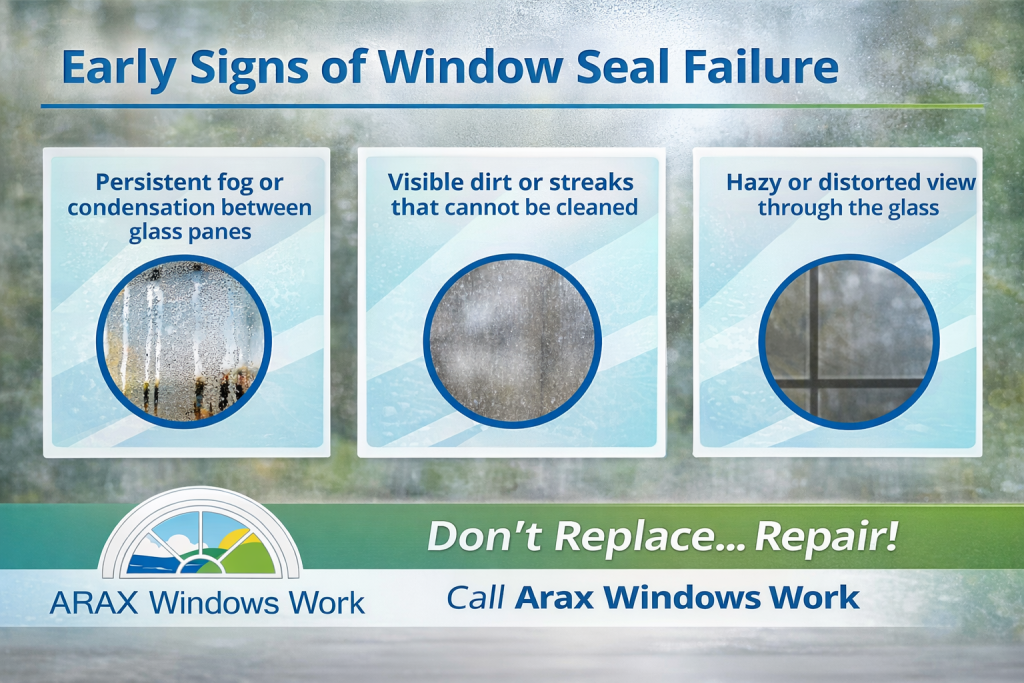
Here are the key signs to watch for:
- Foggy or hazy glass: The most obvious sign. Moisture trapped between the panes creates a cloudy appearance that won’t go away no matter how you clean the window.
- Water droplets or frost: Sometimes, condensation can freeze in cold climates, leaving frost patterns inside the glass.
- Energy inefficiency: Broken seals reduce insulation, which can cause cold drafts near the window or higher energy bills as your heating or cooling system works harder.
- Dirt or debris trapped inside: Dust, pollen, or small particles can enter through a compromised seal, making the window look dirty despite cleaning.
Can You Fix Moisture Between Double-Pane Windows?
Yes, but the solution depends on the severity of the problem. There are temporary fixes for minor issues and professional solutions for long-term results.
How to Fix Moisture Between Double-Pane Windows
Once you know the severity of the issue, you can follow these steps to restore your windows:
Temporary DIY Solutions
For homeowners looking for short-term relief, these methods can reduce fogging:
- Use Silica Gel Packs: Placing small silica gel packets along the window frame can slowly absorb moisture. This works best for minor condensation and is not a permanent solution.
- Apply Gentle Heat: Carefully using a hairdryer or low-heat gun can help evaporate moisture inside the panes. Extreme caution is required to avoid cracking the glass.
- Window Dehumidifier Strips: Some products are designed to draw moisture out from between the panes. While they do not restore the window seal, they can temporarily improve visibility.
Keep in mind that these methods do not repair the broken seal, and fogging may return if the window’s integrity is compromised.
Professional Window Repair Options
For a permanent solution, professional intervention is recommended. Certified window technicians have the tools and expertise needed to restore your windows safely:
- Defogging Services: Technicians drill small holes in the glass, remove moisture, clean the interior, and refill the space with a drying agent or inert gas. This restores clarity but may not fully recover original insulation.
- Seal Replacement: In some cases, replacing the seal or spacer restores both clarity and energy efficiency.
- Full Window Replacement: For old, damaged, or irreparable windows, replacing the unit is the best long-term solution. Modern double-pane windows provide improved thermal performance, advanced seal materials, and warranties that protect your investment.
What You Should Expect to Pay
Understanding the costs of repair or replacement helps you plan:
- Defogging service: $75–$150 per window
- Seal replacement: $150–$300 per window
- Full window replacement: $300–$800 or more, depending on size and type
While DIY fixes may seem cheaper, professional repair ensures your windows stay energy-efficient, perform better, and can even improve the value of your home.
Expert Insights on Seal Failure
Moisture between double-pane windows is more common than many homeowners realize. According to the National Glass Association (NGA), over seventy percent of double-pane windows experience some form of moisture infiltration within fifteen years of installation. Industry experts point out that one of the most critical factors in preventing condensation is the design and quality of the spacer—the component that separates the glass panes. Windows with warm-edge spacers and high-quality desiccants that absorb trapped moisture are significantly less likely to develop fog between the panes.
Experts also caution against using generic DIY sealants or adhesives on broken windows. While these solutions may temporarily reduce leaks, they do not restore the window’s insulation performance and can void manufacturer warranties. The safest approach is to rely on certified window professionals who can repair or replace the seal properly, ensuring both clarity and long-term energy efficiency.
How to Prevent Moisture Between Window Panes
Preventing moisture between your double-pane windows is easier when you follow these steps:
- Step 1: Inspect Your Windows Regularly
Check for cracks, loose caulking, or early signs of condensation. Spotting problems early can save you from more costly repairs later. - Step 2: Control Indoor Humidity
High indoor moisture contributes to foggy windows. Use dehumidifiers, run exhaust fans in bathrooms and kitchens, and ensure proper ventilation in basements and laundry areas. - Step 3: Invest in Quality Window Materials
Choose double-pane windows with Low-E coatings, argon or krypton gas fills, and warm-edge spacers. These features improve insulation, reduce fogging, and keep your windows looking clear longer. - Step 4: Ensure Professional Installation
Even the best windows can fail if installed incorrectly. Certified technicians ensure proper alignment and secure sealing to protect your investment and maximize window lifespan.
When to Call in the Experts
If fogging keeps returning, you notice drafts, or your windows show visible damage, it’s time to call a certified window repair professional. Trying to fix a broken seal yourself can cause cracked glass, injuries, or a temporary fix that doesn’t last. Experts have the experience, tools, and materials to restore your windows safely and effectively.
Restore Your Windows with Arax Window Repair in Chicago, IL
At Arax Window Repair, we specialize in double-pane window defogging, seal replacement, and glass replacement throughout Chicago, IL, and surrounding suburbs. Whether you’re dealing with minor condensation or need a full window replacement, our certified technicians provide lasting results that restore clarity, improve insulation, and boost energy efficiency.
We proudly serve neighborhoods and suburbs including Naperville, Palatine, Lisle, Oak Brook, Arlington Heights, Schaumburg, and more. No matter where you are in the Chicago area, we ensure your windows perform like new and keep your home comfortable year-round.
Don’t let foggy or inefficient windows impact your comfort or energy bills. Contact Arax Window Repair today to schedule a consultation and get your windows working at their best.
FAQs
Will a Hair Dryer Get Rid of Condensation Between Glass Panes?
Using a hair dryer may temporarily evaporate some moisture trapped between the panes, but it is not a permanent fix. Hair dryers cannot restore a broken window seal, and excessive heat can crack the glass. For a lasting solution, professional defogging or seal replacement by certified window technicians is recommended. This ensures the condensation is fully addressed and your windows regain proper insulation and energy efficiency.
How to Get Rid of White Stuff Between Double-Pane Windows?
The white residue or “white stuff” you see between double-pane windows is usually mineral deposits or frost caused by moisture trapped between the panes. This is another sign of seal failure. DIY cleaning cannot reach inside the glass, so the only way to permanently remove it is through professional defogging, seal replacement, or full window replacement. These methods remove moisture, clean the interior, and prevent the white residue from returning, restoring clarity and long-term window performance.
Does condensation on windows mean the house is too cold?
Not necessarily. Condensation on windows usually occurs when warm, moist indoor air meets a cold surface, like a window pane. This can happen in homes that are too cold, too humid, or have poor ventilation.
If condensation appears inside double-pane windows, it often indicates a failed window seal, not just temperature differences. In single-pane or older windows, it may simply mean the indoor air is humid and the glass is colder than the surrounding air.
What is the average lifespan of a double-pane window?
The average lifespan of a double-pane window is typically 10 to 20 years, depending on factors such as quality of materials, installation, climate, and maintenance. High-quality windows with durable seals, Low-E coatings, and argon or krypton gas fills may last longer, while lower-quality or poorly installed windows may develop issues sooner.