

Last Updated on November 11, 2026
If air is passing through a too narrow opening it can start to vibrate, in the same way that your lips vibrate to make a whistle. The vibration in the air creates the sound that you hear, but the real problem here is the gap. Although it may seem harmless, a small opening such as this allows cold air to enter your home as well as moisture and can increase your heating bill throughout the winter.
The hardest wind we experience here is in late summer and early fall. It comes from the northwest and is usually the first hard wind of winter to hit McHenry and Kane counties. It usually starts whistling about 10 PM on the first night of hard wind in late summer and early fall. Years of shrinking weatherstripping have finally given in to air pressure.
Below is a list of possible ways to locate air leaks, possible repairs to consider and the signs that indicate you need more extensive window repairs. These repairs can be done in an afternoon.
Why Does Wind Make a Window Whistle?
There is greater pressure on the outside of your house walls than in your rooms. Therefore air moves from high pressure to low pressure. This air moves along the path of least resistance. When that path is a few mm. wide then it will accelerate down this path. As it does so it starts to vibrate in a particular way. It is these vibrations that we hear as a whistle.
A few observations follow from this, which may help to explain the apparently random occurrence of the whistle:
- It depends on wind direction. So if you have a bedroom that faces West you might hear the sound of air rushing through the tiniest of slits every time there is a West wind but not when the wind has turned to North.
- The width of the opening affects the pitch (high frequency sounds): a very narrow opening produces a very high frequency sound whereas a wide opening sounds like rushing air and often vibrates or hums.
- A bathroom fan, a kitchen range hood or even a clothes dryer pulls air out of the house and as a result makes the differences in pressure even worse. Thus the sound of a whistling window increases when any of these appliances are running.
It’s also worth noting that air flowing out of the house tends to make whistle causes worse, and thus tends to increase the volume of whistle noises. Thus, for example, using a fan (even on a ceiling) tends to increase the volume of whistle noises coming from a cause that is affected by airflow out of the house.
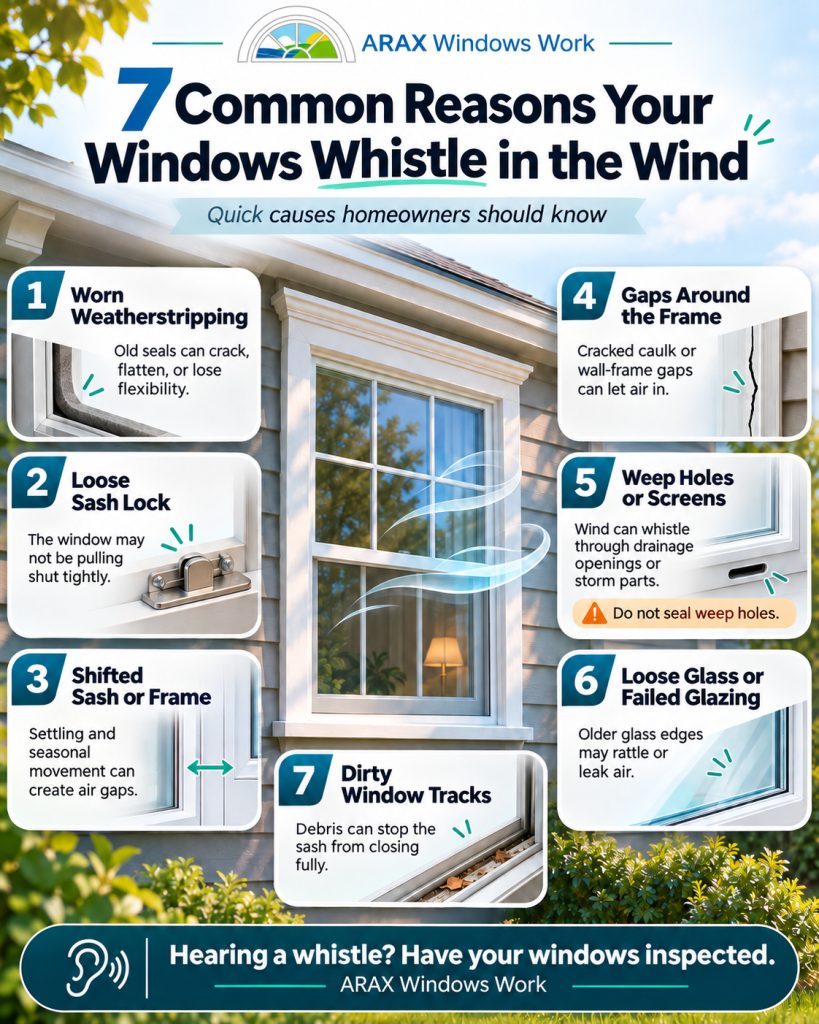
7 Common Reasons Your Windows Whistle in the Wind
1. Worn or compressed weatherstripping
Most of the whistling windows we inspect have worn or compressed weatherstripping. South- and west-facing windows suffer the most from sun exposure. If the weatherstripping looks worn or has been pinched, it should be replaced. You can test the weatherstripping by running your finger along the seal. If it feels hard, cracked or will not return to its original shape after being compressed, it is time to replace it.
2. The sash lock isn’t pulling the window tight
The lock on the meeting rail of a double-hung window must pull the sashes together to press them against the weatherstripping. Often the whistle is caused by an unlocked sash or worn keeper, allowing the sash to not close completely. This is usually caused by loose or worn screws that no longer pull the sash closed.
3. A sash or frame that has shifted
This type of problem is most often caused by the normal settling of a house as well as the natural expansion and contraction of vinyl products in Chicago area weather. A sash that has been pushed out of place can cause air leaks of all types around the sash including a loud whistle.
4. Gaps between the window frame and the wall
Caution: Exterior weatherstrip may appear to be damaged when actually the frame/siding interface is pulling away. Such interfaces must be checked as well for caulk cracking and loss.
5. Storm windows, screens, and weep holes
Vinyl replacement windows installed in homes built many years ago often have smaller slots at the bottom of the exterior frame of the window. These are called weep holes. Weep holes allow water to drain from the window frame. In very windy conditions the air flowing through the weep holes can sometimes produce a faint whistle. This would be unacceptable to seal up. Sealing up the weep holes would cause greater problems with water in the window frames.
6. Loose glass or failed glazing
If your old windows are single-pane, made of wood, and are 50+ years old, it is possible that the glazing putty has dried and fallen out. The glass will have shifted and air will enter at the edges of the glass creating a whistle/rattle sound.
7. Dirty or Debris-Filled Window Tracks
Dirt, dust, and debris can build up in window tracks over time, preventing the sash from closing properly. When the window cannot sit tightly against the frame, small gaps may allow outside air to enter and create whistling sounds
How to Find Where Your Window Is Leaking Air
Wait a windy day to pinpoint the problem.
1. Shut all exterior doors & windows. Turn on bathroom exhaust fans & range hood to pull house negative.
TEST FOR LEAKS WITH INCENSE AND PAPER
Dt. 1/21/10
2. Find the leak by smoke test or by touch with a damp hand. Hold the end of a stick of incense close to the window in several places. The smoke will curl around and point to the location of the gap. A damp hand feels for the gaps.
3. The Paper Test. Shut the window on a dollar bill. If it goes in easily then you have a problem with your weatherstripping. Try to find 3 or 4 locations along each side of the sash to test.
4. Lock it and check if the whistle stops. If it does then you may be done depending on the cause of the whistle.
5. Examine caulk joint, storm windows and sill from the outside of the house. Note where the leak is and what you need to do to fix it.
Air leaks into your home through the same places that wind whistles through your windows.
DIY Fixes for a Whistling Window
First, start with the lock and weatherstripping. If these items are working properly, most whistling windows will be resolved.
Lock it and check the weatherstrip.
Lock all of your windows that you don’t plan to open during the heating season. Check the weatherstrip on your sashes for wear and replace it as necessary. A sash lock usually costs less than a pizza and can be installed by most anyone.
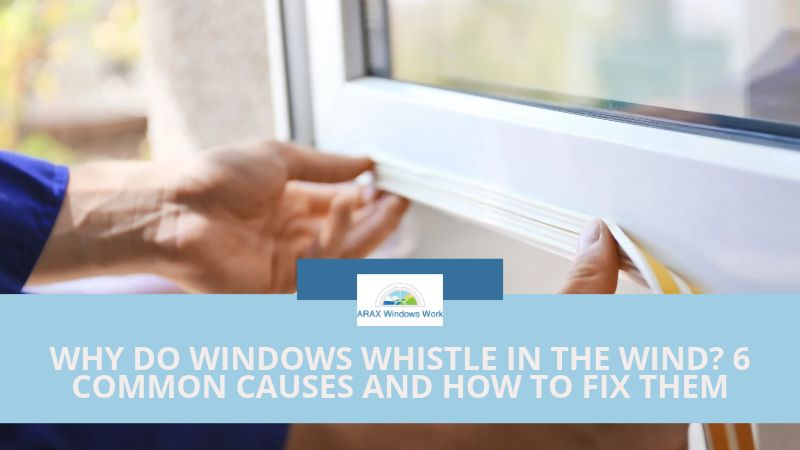
Replace weatherstripping.
Try to obtain a replacement piece that is the same width and type as the old piece. The side of a wood double-hung needs V-strip weatherstripping while a casement needs bulb compression weatherstripping and a slider pile weatherstripping that slips into a channel in the slider. After cleaning the surface where you will be placing new weatherstripping, allow it to reach room temperature before attempting to apply any adhesive-backed product.
Re-caulk the exterior frame joint where it passes through the siding.
Cut the old caulk and remove it, clean the joint well and apply exterior grade sealant. Most of these items need to be above 40°F for proper cure. As with prior suggestions, weep holes must remain open as well as the bottom of any storm windows.
These will be temporary stop-gaps to get through the season. You can use removable rope caulk in the gap or use a plastic shrink film around the interior trim of the window frame.
Do not use duct tape to try to fix your whistling window. In cold weather, duct tape does not hold well. It can also stick to surfaces and then come off leaving residue on your finish. It will only mask the problem rather than fixing it.
When to Repair a Whistling Window Instead of Replacing It
A whistling sound that returns even after replacing the weatherstripping may point to a bigger problem. In many cases, the window sash is no longer sitting or closing properly within the frame. New weatherstripping cannot correct alignment issues or gaps caused by a shifted sash.
If you notice any of the following signs, it may be time to contact a window repair specialist:
- Visible gaps or drafts: You can see daylight between the sash and frame, or feel air coming through the window even when it is closed.
- Signs of water damage: The sill has soft spots, peeling exterior paint, or visible water stains on the wall below the window.
- Problems with the crank: A casement window crank feels loose, does not turn smoothly, or cannot pull the sash tightly against the frame.
- Difficulty opening or closing: The window sticks, feels difficult to operate, or gets stuck partway.
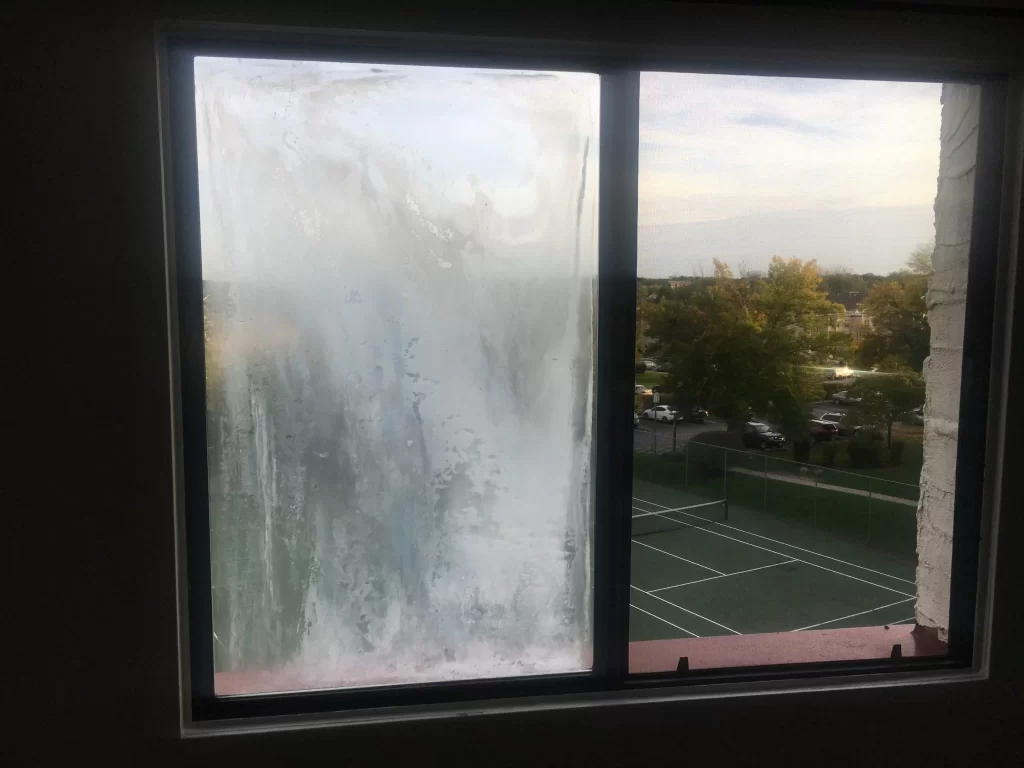
- Fog or condensation between the panes: Moisture or fogging between the glass panes may indicate a failed window seal.
Window Repair May Be an Option Instead of Replacement
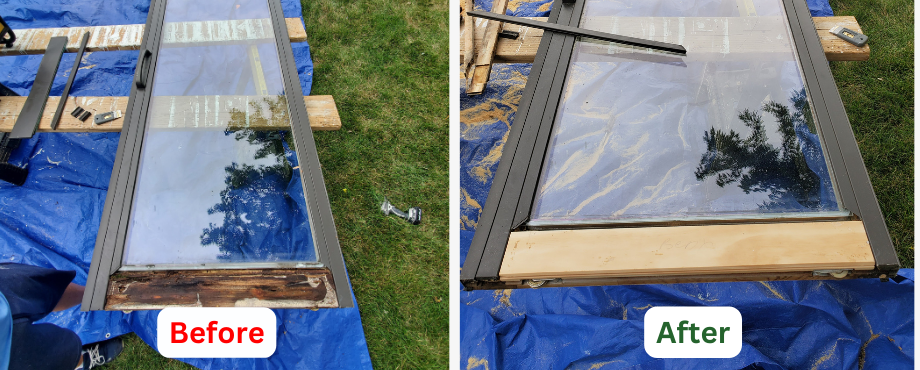
Many problems with older sash windows can be repaired without replacing the entire window. Depending on the condition, a specialist may be able to realign the sash, replace worn balances or operators, install new glass units, or rebuild sections of a rotted wood sill.
Full window replacement may make more sense when the frame itself has extensive rot or multiple failures that make repairs nearly as expensive as installing a new window.
If you’re unsure which option makes more sense, read our guide to sash window repair vs. replacement. It covers the signs that indicate when a repair is practical and when replacement may be worth considering.
Don’t Wait Until Winter to Address Window Drafts
Window leaks and cold rooms often become more noticeable during winter, but you do not have to wait for freezing temperatures to fix the problem. If your windows are whistling or letting cold air inside, consider having them inspected before the weather gets colder.
According to the U.S. Department of Energy, windows can account for approximately 25% to 30% of a home’s heating and cooling energy use. Addressing air leaks can help reduce unwanted heat loss during winter.
Get Your Windows Checked by a Local Repair Team
Arax Windows Work repairs all types of windows, including wood, vinyl, and aluminum, throughout Cary, IL, and the surrounding northwest Chicago suburbs. If your windows are still making a whistling noise after replacing the weatherstripping, our team can inspect them, find where the air is getting in, and recommend the right fix. In many cases, a repair may be all you need instead of a full window replacement.
Call us at (815) 230-1890 or schedule a window repair visit.