

Last Updated on March 3, 2026
If you have ever felt a cold draft standing near a window in winter or noticed one room that is always hotter than the rest of the house in summer, your windows are likely part of the problem.
Windows are responsible for a significant amount of heat gain and heat loss in most homes. The U.S. Department of Energy estimates that about 25 to 30 percent of residential heating and cooling energy use can be traced back to windows. That means choosing the right type can have a real impact on comfort and long term energy costs.
So what are the most energy efficient window types available today? The answer depends on climate, budget, and goals, but a few options consistently stand out.
Triple Pane Windows
Triple pane windows are generally the most energy efficient option in terms of insulation performance.
They are built with three layers of glass separated by two sealed spaces. Those spaces are typically filled with argon or krypton gas, which slows heat transfer better than regular air. The result is a lower U factor, meaning less heat escapes during winter and less outside heat enters during summer.
In colder climates, triple pane windows can improve insulation performance by roughly 20 percent or more compared to standard double pane units. Homeowners often notice that rooms feel less drafty and interior glass surfaces stay warmer in winter. They also provide better sound reduction, which is an added benefit in busy neighborhoods.
Triple pane windows cost more upfront. In mild climates, the added performance may not justify the price difference. But in regions with long winters or extreme temperature swings, they can be worth the investment.
Double Pane Windows with Low E Glass
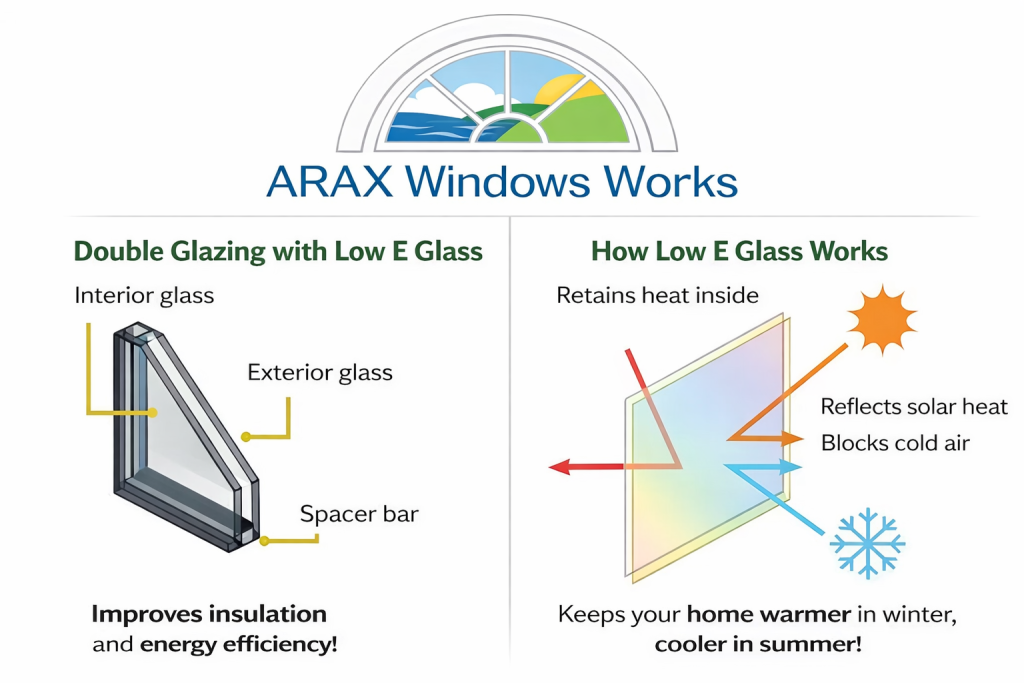
For most homes, high quality double pane windows with Low E glass offer the best balance between efficiency and cost.
Double pane windows use two sheets of glass with an insulating space between them. Compared to old single pane windows, the improvement in performance is substantial.
The key feature to look for is Low E, which stands for low emissivity. This is a thin, nearly invisible metallic coating applied to the glass. It reflects infrared heat while still allowing natural light to pass through.
In practical terms, Low E glass helps keep heat inside during winter and blocks a portion of solar heat during summer. It also reduces ultraviolet rays that can fade furniture and flooring over time.
Replacing older single pane windows with modern double pane Low E units can reduce heating and cooling costs by up to 20 percent in some homes, depending on location and usage patterns.
For many homeowners, this type of window delivers strong performance without the higher cost of triple pane construction.
Gas Filled Windows
The gas between the panes plays a larger role than most people realize.
Standard air conducts heat more easily than inert gases like argon or krypton. Argon is the most common option because it improves insulation without adding significant cost. Krypton offers slightly better performance and is often used in higher end triple pane systems.
Argon filled windows can improve thermal performance by roughly 6 to 15 percent compared to air filled units. While that may not seem dramatic, it contributes to overall efficiency when combined with proper glazing and frame materials.
Frame Materials and Their Impact
Energy efficiency is not just about the glass. The frame matters too.
Fiberglass frames are among the most efficient and durable options available. They expand and contract very little with temperature changes and provide strong insulation.
Vinyl frames are popular because they are affordable and offer solid insulating properties. However, quality can vary depending on the manufacturer.
Wood frames naturally insulate well but require maintenance over time.
Aluminum frames are strong but conduct heat easily unless they include a built in thermal break to reduce heat transfer.
A high performance window combines efficient glass with a well insulated frame.
Climate Specific Considerations
The most energy efficient window for one home may not be ideal for another.
In hot climates, solar heat gain coefficient is especially important. Lower values help reduce the amount of solar heat entering the home, which lowers cooling demand.
In colder climates, homeowners often benefit from windows with strong insulation and sometimes moderate solar heat gain to take advantage of winter sunlight.
This is why many efficient windows are rated according to regional energy zones. Choosing a window designed for your specific climate improves overall performance.
Installation Quality Matters
Even the most advanced window will underperform if it is installed poorly.
Air leaks around the frame can significantly reduce efficiency. Proper sealing, flashing, and insulation around the window opening are essential. In some cases, energy loss occurs not through the glass but around it.
Window glass can also fail due to environmental stresses. For instance, sudden temperature changes in winter can cause glass to crack if it is already weakened or under heat stress. To understand this better, see our article on what causes window glass to crack in cold weather. Learning why glass fails can help you decide whether you need repair or replacement.
Professional installation is just as important as the window specifications.
So What Is the Most Energy Efficient Choice
If performance is the only goal, triple pane windows with Low E coatings, insulated gas fills, and fiberglass frames typically offer the highest level of efficiency available in residential construction.
However, for many homeowners, double pane Low E windows with argon gas provide excellent efficiency at a more practical price point.
The best decision depends on your climate, how long you plan to stay in the home, and your budget. Energy efficient windows are not just about lowering utility bills. They improve indoor comfort, reduce strain on heating and cooling systems, and create a more consistent indoor environment throughout the year.
When evaluating options, review the U factor, solar heat gain coefficient, and air leakage ratings. Ask about frame construction and installation practices. A well selected and properly installed window can make a noticeable difference every day.
Need Expert Guidance on Your Windows in Mount Prospect, IL
Not every window problem requires a full replacement. In many cases, improving efficiency and comfort can be as simple as addressing failed seals, replacing insulated glass units, or correcting minor installation gaps.
At Arax Windows, we specialize in window repair and glass replacement in Mount Prospect, IL. We help homeowners restore performance, eliminate drafts, and improve insulation without unnecessary replacement costs.
If you are dealing with foggy double pane windows, cracked glass, air leaks, or rising energy bills, our team can assess your situation and recommend the most effective solution for your home in Mount Prospect.
Contact Arax Windows today to schedule your inspection and learn how professional window repair and glass replacement in Mount Prospect, IL can improve your home’s comfort and energy efficiency.
Call (815) 230-1890 or request service online.
FAQs
Which is the best energy rating, A or E?
When referring to energy ratings, think of the rating scale like a school grade: A is better than E. A lower energy rating letter (closer to A) indicates higher efficiency.
In window ratings:
- An A rating generally means the window performs well in insulating heat and blocking unwanted solar gain.
- A rating closer to E typically indicates lower efficiency.
Windows with an A rating will help reduce heating and cooling losses, improve comfort, and could lower energy bills compared to lower-rated windows. When choosing new windows, always compare performance labels and prioritize lower (better) ratings.
Should I replace 20-year-old windows?
A 20-year threshold is a good rule of thumb, but the answer depends on how your windows are performing now.
Consider replacement if:
- You feel drafts or uneven temperatures near windows
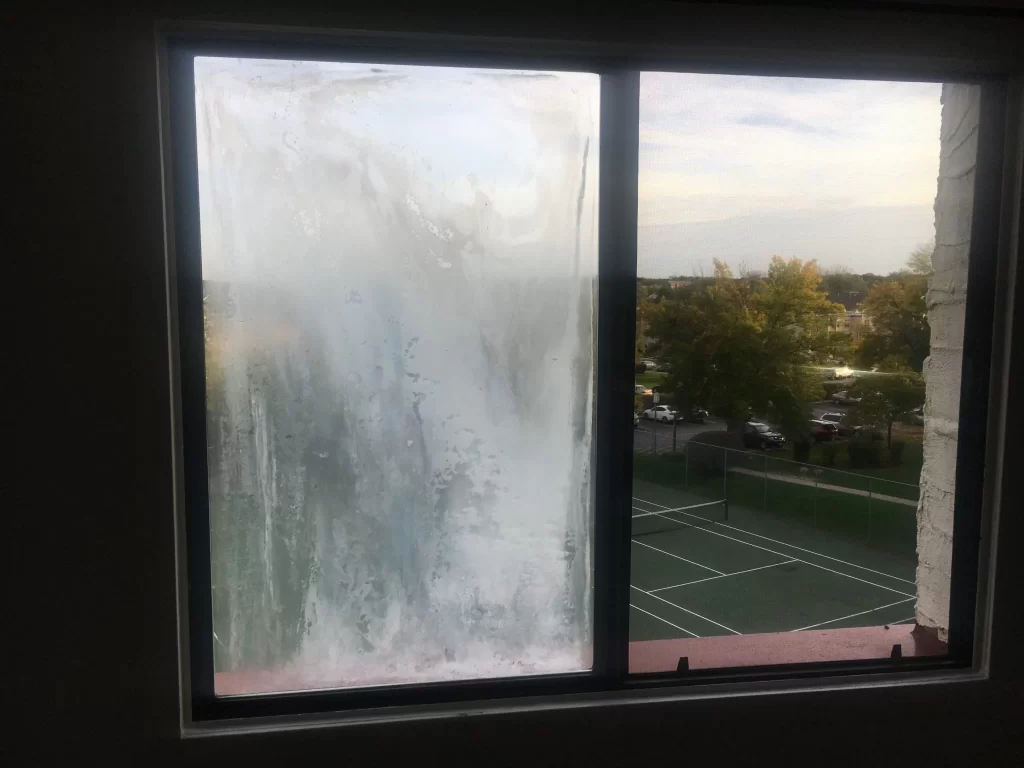
- The glass fogs between panes (indicating seal failure)
- You notice higher heating or cooling bills than expected
- Frames are warped, rotting, or difficult to operate
- You see condensation buildup that doesn’t go away
If the window frames and seals are still in good condition, sometimes only the glass units or hardware need attention. Professional evaluation can determine whether window repair or glass replacement will be sufficient.
In many cases, replacing 20-year-old windows with modern, energy-efficient models can improve comfort, reduce energy costs, and increase long-term value, but it’s always worth a closer look before committing to full replacement.
How do I know if my windows are losing energy?
Common signs include:
- Drafts even when windows are closed
- Cold glass surfaces in winter
- Rooms that feel hotter in summer
- Rising utility bills without changes in usage
- Condensation between panes
What is a good U Factor for windows?
The U Factor measures how well a window prevents heat from escaping. The lower the number, the better the insulation.
- 0.30 or lower is considered energy efficient for most climates.
- Colder regions often benefit from even lower ratings.
When comparing windows, always check the full performance label rather than relying only on marketing claims.
How much can energy efficient windows reduce energy bills?
Energy savings depend on your current windows, climate, and how your home is insulated, but there are reliable benchmarks from the U.S. Department of Energy.
According to their data:
- Windows account for about 25 to 30 percent of residential heating and cooling energy use in many homes.
- Replacing old single pane windows with modern ENERGY STAR certified double pane windows can save homeowners an average of 12 percent on annual energy bills nationwide.
- In colder northern climates, savings can range from $100 to $500 per year, depending on home size and fuel type.
- In warmer climates, savings typically come from reduced air conditioning use, especially when upgrading to Low E glass with a low solar heat gain coefficient.