

Last Updated on February 20, 2026
Window seal failure occurs when the airtight seal of a double or triple pane window breaks, allowing insulating gas to escape and outside air and moisture to enter. This results in fog or condensation trapped between panes and a permanent loss of insulation. Once a seal fails, it cannot be repaired or resealed. The only effective solutions are replacing the insulated glass unit or replacing the entire window if the frame or structure is compromised.
Most foggy window problems are not cosmetic, are not caused by homeowner behavior, and do not resolve on their own. Understanding the cause determines whether replacement glass or full window replacement is appropriate.
What a Window Seal Does and Why It Fails Matters
Insulated windows are engineered systems. Each unit consists of two or three panes of glass separated by a sealed space filled with insulating gas. The seal around the perimeter maintains that environment by preventing gas loss, blocking moisture, and keeping pressure balanced between panes.
When the seal is intact, the window limits heat transfer and stabilizes indoor temperatures. When the seal fails, the glass still blocks rain but no longer insulates. Energy loss begins immediately even if the window appears structurally intact.
This is why window seal failure affects comfort and utility costs long before it becomes visually obvious.
How to Identify True Window Seal Failure
Moisture location is the determining factor. Condensation on the interior surface of glass is typically caused by high indoor humidity and can often be wiped away. Moisture trapped between panes indicates seal failure.
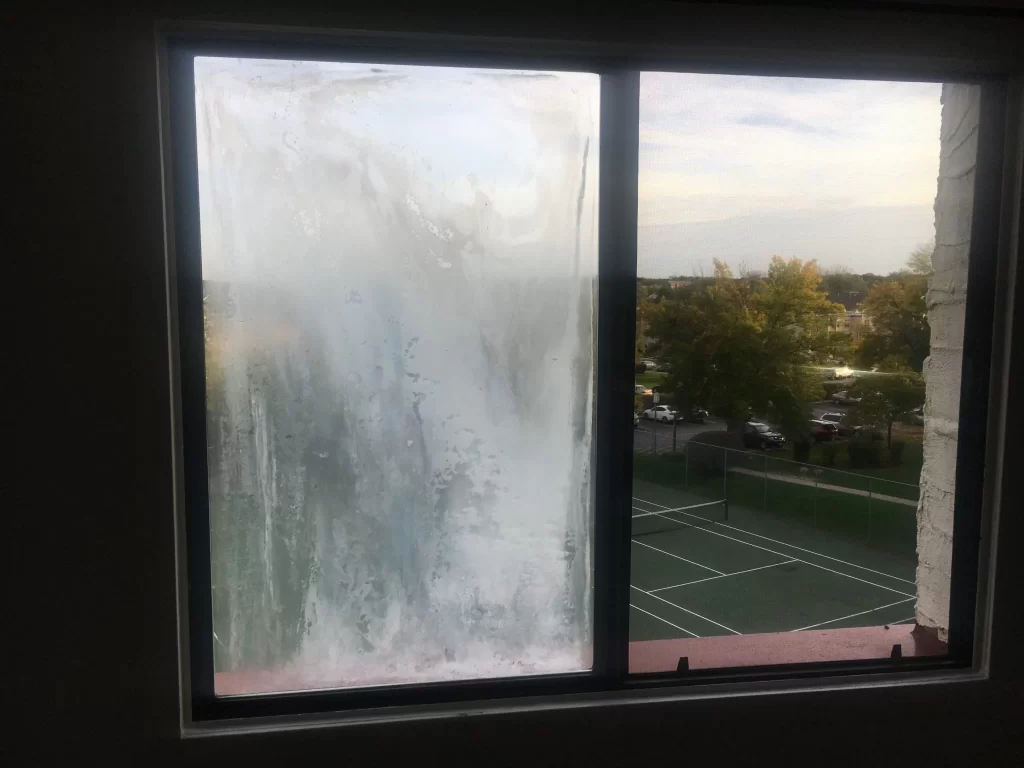
Confirmed signs include fog or haze inside the glass unit, condensation that never clears, visible water droplets between panes, and a cloudy appearance that worsens with temperature changes. If moisture cannot be accessed from either side of the glass, the seal has already failed.
There is no scenario where trapped moisture between panes dries out permanently without glass replacement.
During winter months, foggy windows are one of the most common reasons homeowners suspect seal failure. In some cases, cold weather condensation can look similar but has a different cause and solution. Our article How Do I Get Rid of Foggy Windows in My House in the Winter? explains why seasonal fogging happens, what can be corrected without replacement, and when fog between panes indicates true window seal failure.
Why Window Seals Fail Over Time
Seal failure is the result of predictable physical and material processes rather than misuse or neglect.
- Thermal expansion and contraction: Glass expands when heated and contracts when cooled. This movement occurs daily and seasonally. Over years, repeated expansion and contraction reduces seal flexibility. Once elasticity is lost, microscopic openings form. Insulating gas escapes first, followed by outside air and moisture.
- Material aging: Window seals are chemical compounds that degrade gradually. Exposure to sunlight, oxygen, and temperature cycling causes hardening and shrinkage. This process explains why seal failure often occurs ten to twenty years after installation without visible damage.
- Installation related stress: Windows installed slightly out of square place constant pressure on the glass. That pressure transfers directly to the seal and never resolves. Over time, premature seal failure occurs, sometimes affecting only specific windows in the same home.
- Moisture exposure at the perimeter: Prolonged moisture around the frame weakens seal edges. High indoor humidity, condensation buildup, poor drainage, or flashing issues accelerate degradation even if water never directly enters the glass cavity.
- Frame movement: Wood and lower quality vinyl frames can warp or shift due to moisture and temperature exposure. The glass remains rigid while the seal absorbs movement until it fails.
Why Window Seals Cannot Be Repaired
Once seal failure occurs, the internal environment of the insulated glass unit is permanently altered. Insulating gas has escaped, air pressure has equalized, and moisture has bonded to interior glass surfaces.
External caulking only seals surface gaps. It does not restore internal insulation. Defogging removes visible moisture but leaves the unit unsealed and inefficient. There is no method to recreate the factory sealed environment without replacing the glass unit itself.
Any solution that does not involve replacing the insulated glass unit does not restore thermal performance.
How to Fix Window Seal Failures?
Insulated Glass Unit Replacement
Replacing the insulated glass unit corrects window seal failure at its source. The failed glass assembly is removed and replaced with a new factory sealed unit that contains intact seals and insulating gas. The existing window frame remains in place.
This option is appropriate when the frame is structurally sound, properly installed, and free from warping, rot, or air leakage. In these cases, the frame is not the problem. The failure is isolated to the glass unit itself.
Insulated glass replacement restores clarity, thermal insulation, and comfort while avoiding unnecessary disruption to interior finishes or exterior siding. When installed correctly, performance is comparable to a new window at a lower overall cost.
If you are deciding whether repairing your windows is sufficient or whether full replacement is the better investment, frame condition and window age matter. Our guide Is It Worth It to Repair Instead of Replace Your Windows? breaks down when insulated glass replacement makes sense and when replacing the entire window provides better long term value.
Full Window Replacement
Full window replacement is warranted when seal failure is part of a broader breakdown of the window system rather than an isolated glass issue. This includes warped or deteriorated frames, persistent air leakage around the window opening, outdated designs with poor insulation, or widespread seal failure across multiple windows.
In older homes, replacing individual glass units can become inefficient if the surrounding frames are nearing the end of their service life. In those situations, full replacement resolves structural integrity, air sealing, and thermal performance in one step.
Although full replacement involves a higher initial investment, it often provides better long term value when the window system as a whole is compromised.
Why Defogging Does Not Solve the Problem
Defogging removes visible moisture by venting the space between panes. While this may temporarily improve appearance, it does not restore insulating gas, rebuild the seal, or prevent outside air from reentering the glass unit.
The window remains thermally inefficient, and condensation frequently returns as temperatures fluctuate. Because defogging does not address the underlying seal failure, it should be viewed strictly as a cosmetic treatment, not a functional repair.
For homeowners concerned with comfort, energy efficiency, or long term durability, defogging does not provide a meaningful solution.
Consequences of Ignoring Window Seal Failure
When a window seal fails, heat moves freely through the glass. In winter, interior glass surfaces become colder, increasing drafts and discomfort. In summer, heat enters the home more easily, increasing cooling demand.
These temperature differences raise the likelihood of condensation forming around frames and nearby walls. Over time, repeated moisture exposure can contribute to mold growth, material degradation, and interior finish damage.
Energy loss from failed seals also increases heating and cooling costs year after year. What begins as a visual issue often becomes a comfort and cost issue if left unaddressed.
How to Extend the Life of Replacement Windows
Seal failure cannot be eliminated entirely, but its onset can be delayed through informed choices and proper maintenance.
Higher quality window systems use better seal materials and spacer designs that resist aging longer. Proper installation ensures the glass is evenly supported and free from constant stress. Controlling indoor humidity reduces moisture exposure at seal edges. Maintaining exterior drainage and flashing prevents water from lingering near the window perimeter.
Addressing condensation, leaks, or drainage issues early helps reduce accelerated seal degradation.
Need Help With Window Seal Failure in Downers Grove, IL
If you are dealing with foggy windows, condensation trapped between panes, or rising energy costs, professional evaluation can help you determine the right solution before the problem worsens.
Our team provides window repair and insulated glass replacement services in Downers Grove, IL, helping homeowners restore window performance without unnecessary full replacement when frames are still in good condition. We also offer full window replacement when the window system has reached the end of its service life.
Whether you need glass replacement, window repair, or an expert assessment of seal failure, we can explain your options clearly and recommend the most practical fix for your home.
Schedule an inspection or request a quote today to restore comfort, clarity, and energy efficiency to your windows.
Serving Downers Grove and surrounding DuPage County communities. Call now at (815) 230-1890 or request service online to get started
Window Seal Repair FAQs
Can I reseal a window myself?
You cannot reseal a failed double or triple pane window yourself.
Once the internal seal fails, the insulating gas has already escaped and moisture has entered the space between the panes. Applying caulk or sealant around the glass only seals exterior air gaps. It does not restore the internal seal or insulation.
DIY sealing may help with drafts or minor air leaks around the frame, but it does not fix foggy glass or condensation between panes. If moisture is trapped inside the window, the only real fixes are replacing the insulated glass unit or replacing the window entirely.
How much should it cost to reseal a window?
True window resealing is not a valid repair for insulated glass units, so there is no meaningful cost for “resealing” a failed window seal.
If a contractor offers resealing or defogging, it is typically a cosmetic service and not a structural fix. Costs for these services are often lower, but they do not restore insulation and the fog often returns.
For comparison:
- Insulated glass unit replacement typically costs less than full window replacement and restores performance
- Full window replacement costs more but addresses frame, insulation, and air leakage together
- The correct cost depends on whether only the glass has failed or the entire window system is compromised
What are the alternatives to window sealing?
Since failed window seals cannot be repaired, the real alternatives are replacement options.
The most common alternatives are:
- Replacing the insulated glass unit while keeping the existing frame
- Replacing the entire window when frames are damaged, warped, or outdated
- Defogging the window for temporary cosmetic improvement only
Insulated glass replacement is often the best balance of cost and performance when the frame is in good condition. Full replacement is appropriate when the window system has reached the end of its service life.
What does a failed window seal look like?
A failed window seal has visible and persistent signs that cannot be cleaned away.
Common indicators include:
- Fog or haze trapped between the glass panes
- Condensation that never clears
- Water droplets visible inside the window
- A cloudy or milky appearance that worsens with temperature changes
- Rainbow or oily looking distortion in sunlight
If moisture is visible between panes and cannot be wiped off from either side, the seal has already failed. This condition does not resolve on its own and indicates permanent insulation loss.