

Last Updated on October 28, 2026
You close the window, turn the lock, and it stops halfway. Or the latch swings right past the keeper without catching. However it happens, a misaligned window lock is a common hardware problem in Chicagoland homes, and in many cases, you can fix it without replacing the window.
The problem isn’t always the lock itself. A loose keeper, sagging sash, worn balance, or buildup in the window tracks can prevent the hardware from lining up. Understanding what’s causing the problem can save you from replacing perfectly good parts.
Below, we’ll explain how window locks work, what causes them to become misaligned, which repairs you can safely try yourself, and when professional window hardware repair makes more sense.
Key takeaways
- A window lock has two parts: the lock (a cam or latch) and the keeper (sometimes called the strike). Misalignment means they no longer line up when the window is closed.
- The usual causes are loose or stripped screws, a sash that sits low because of worn balances, wood that swells with humidity, and paint or debris that keeps the sash from closing fully.
- Many fixes take under an hour, like tightening screws, repairing stripped holes, cleaning the tracks, or moving the keeper.
- If the sash won’t close all the way, drops on its own, or the wood around the screws feels soft, the lock is a symptom of a bigger problem.
- A window that can’t lock is a security risk and a source of drafts, so it’s worth fixing before winter.
How Does a Window Lock Work?
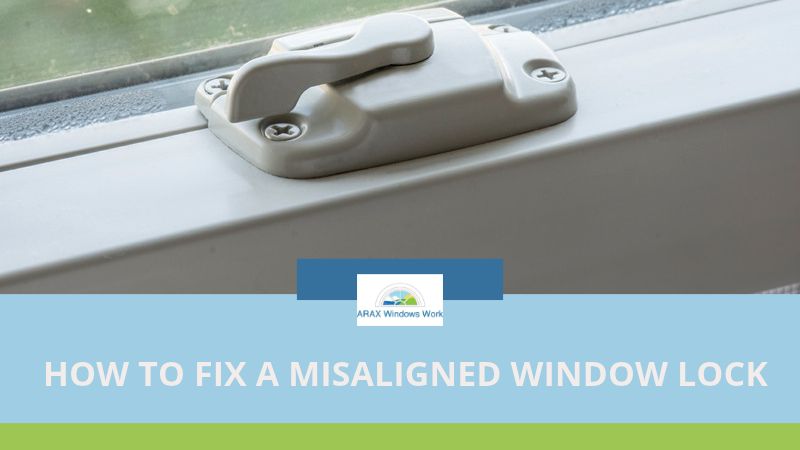
Most residential windows use a lock and a corresponding keeper, sometimes called a strike. When the window closes, these two components must meet in the correct position for the lock to engage securely.
The locking mechanism depends on the window style:
- Double-hung and single-hung windows: Usually have a cam-style sash lock on the meeting rail. Turning the lock engages a keeper on the opposite sash and helps pull the two rails together
- Casement windows: Often use a lever-operated mechanism that engages one or more keepers along the sash, drawing the window against its weatherstripping.
- Sliding windows: Typically use a latch or hook that catches on the frame or opposing panel.
Even a small shift in the sash or locking hardware can prevent these components from meeting properly. The lock may become difficult to turn, catch only partway, or miss the keeper entirely.
Why Is My Window Lock Not Lining Up?
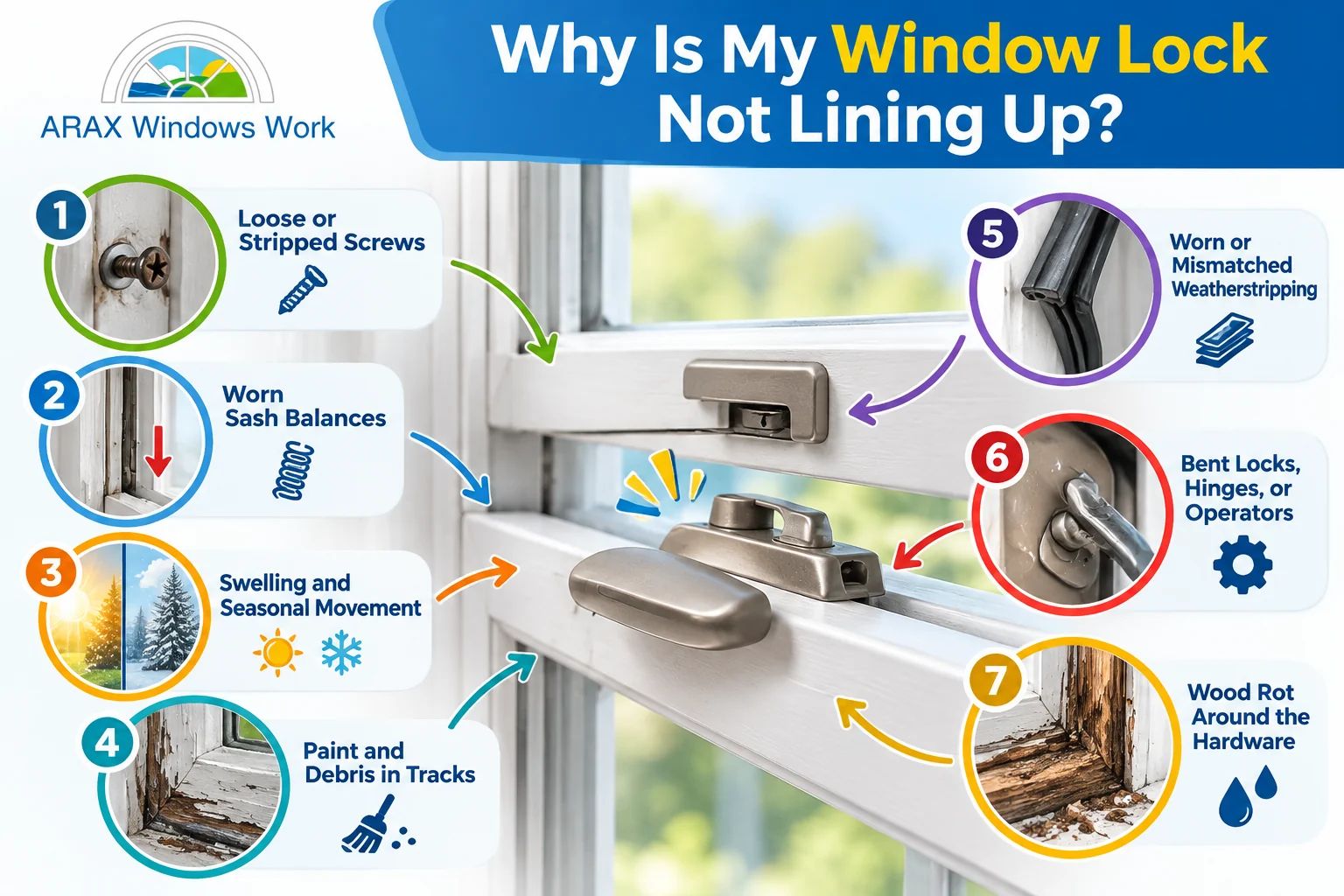
A window lock rarely becomes misaligned for no reason. In most cases, normal wear, movement, or a small change in the window’s position causes the lock and keeper to stop lining up. Here are the most common causes to check before assuming the hardware needs to be replaced.
Loose or Stripped Lock Screws
Over years of use, the screws holding the lock and keeper back out, or their holes wear oversized. A loose keeper can twist just far enough to block the cam. This is the easiest cause to check, so start here.
Worn Window Sash Balances
On double-hung windows, balances hidden in the side jambs hold the sash in place. They might be springs, spiral rods, or cord-and-pulley systems in older homes. When a balance weakens, the bottom sash can sit slightly low or creep down after you close it. The meeting rails no longer line up, and the cam rides above or below the keeper. If your window slides down on its own or feels unusually heavy, suspect the balances.
Swelling and Seasonal Movement
Wood windows absorb moisture. During humid Chicago summers, a sash can swell enough that it won’t close all the way, then shrink back once the heat comes on in winter. Houses also settle, and freeze-thaw cycles shift framing a little each year. That’s why a lock that worked fine in January can bind in July.
Paint and Debris in Window Tracks
Layers of old paint on the sash, stops, or keeper can keep a window from seating fully. So can grit and dead insects packed into the tracks.
Worn or Mismatched Weatherstripping
Compressed or torn weatherstripping changes how the sash sits in the frame. Replacement weatherstripping that’s thicker than the original can also push the sash out just far enough that the lock can’t reach.
Bent Locks, Hinges, or Operators
Forcing a stubborn lock closed can bend the cam or crack a die-cast keeper. On casement windows, worn hinges and operators let the sash sag on one side, so the keepers on the sash drift away from the lock arms on the frame.
Wood Rot Around the Hardware
If the wood under the lock or keeper has gone soft, the screws have nothing solid to grip and the hardware will keep loosening no matter how often you tighten it. Rot usually starts low on the sash and sill, where water sits. Our guide on why window frames rot covers the warning signs.
How to Tell Why Your Window Lock Won’t Latch
Before you start adjusting screws or replacing hardware, take a few minutes to figure out exactly where the misalignment is coming from. A quick inspection can tell you whether the problem is with the lock, the keeper, the sash, or the window frame, and help you avoid fixing the wrong part.
- Close the window completely and look closely. On a double-hung window, check whether the two meeting rails are level and flush. On a casement, check whether the gap between sash and frame is even all the way around.
- Turn the lock slowly and watch where the cam touches the keeper. If it hits the top edge of the keeper, the bottom sash is probably sitting low. If it hits the side, the keeper has shifted or the sash isn’t pushed all the way closed.
- Wiggle the lock and the keeper with your fingers. Any play means loose screws.
- Press firmly on the sash while you turn the lock. If it locks only under pressure, something is keeping the sash from seating on its own, like swelling, debris, or thick weatherstripping.
Raise the bottom sash halfway and let go. If it drifts down, the balances are worn.
Window Lock Problems: Symptoms, Causes, and Solutions
| What You Notice | Possible Cause | What to Check |
|---|---|---|
| Lock turns but misses the keeper | Shifted keeper or sash | Check the keeper position and sash alignment. |
| Window locks only when pushed firmly | Sash isn’t fully seated | Inspect tracks, swelling, and weatherstripping. |
| Lock or keeper moves when touched | Loose or stripped screws | Check mounting screws and holes. |
| Double-hung window feels heavy or won’t stay open | Worn sash balances | Have the balance system inspected. |
| Casement window lock won’t engage | Sagging sash or worn hinges | Inspect hinges and operator hardware. |
| Screws won’t hold in wooden sash | Stripped holes or deteriorated wood | Check whether the wood is sound enough to repair. |
How to Fix a Misaligned Window Lock
If the misalignment is minor, you may be able to correct it with a few simple adjustments. These fixes are generally safe to try as long as you work carefully and stop if the hardware feels stuck or the window becomes difficult to operate.
Tighten the Screws
Use a hand screwdriver rather than a drill so you don’t strip the heads or the holes. Snug up both the lock and the keeper, then test the window a few times.
Repair Stripped Screw Holes in Wood
If a screw just spins, remove it, pack the hole with wooden toothpicks or a sliver of wood dipped in wood glue, and let it dry. Trim the filler flush with a utility knife and drive the screw back in. A slightly longer screw of the same size can also work but be careful on thin sashes. Too long and you can hit the glass. Stripped holes in vinyl or aluminum frames are trickier and are usually better left to a pro.
Move the Keeper
If the sash closes properly but the cam still misses, the keeper needs to move. Note where the cam lands, remove the keeper, fill the old holes, drill small pilot holes in the new position, and reinstall. For tiny vertical adjustments, a thin shim behind the keeper can raise it just enough. Some keepers have slotted screw holes that allow a little adjustment without drilling at all.
Clean and Lubricate
Vacuum the tracks, wipe them down, and gently scrape loose paint from the edges where the sash meets the stops. Then apply a silicone-based or dry PTFE lubricant to the lock mechanism and tracks. Skip oil-based products, which hold onto dirt and can make things worse over time.
If your home was built before 1978, the paint on your windows may contain lead. Don’t sand or dry-scrape painted window parts until you know what you’re dealing with.
Check Casement Hinges and Operators
On a casement, open the window and tighten any loose screws on the hinges and operator arm. If the sash still sags on the lock side after that, the hinges are likely worn and need replacement.
What Should a Window Repair Technician Check Before Replacing the Lock?
Sometimes a misaligned lock is a symptom of a larger window problem. If the sash, balance, or frame has shifted, adjusting the lock alone won’t solve the underlying issue. It’s time to call a window technician if you notice any of the following:
- The sash won’t stay open or slams shut, which usually means the balances need replacing.
- The wood around the hardware is soft, cracked, or crumbling.
- The sash looks warped or out of square in the frame.
- The lock or keeper is broken, and you can’t find a matching part, which is common with older or discontinued hardware.
- A casement operator is stripped or the hinges are bent.
- You’ve tightened and adjusted everything, but the problem keeps coming back.
Balance replacement is a good example of when professional help can save you time and frustration. It typically requires removing the sash and matching the replacement balance to the window’s size and weight. If the wrong balance is installed, the sash can sit out of position again, leaving the lock misaligned and bringing you right back to the original problem.
When Should You Call a Professional for Window Lock Repair?
Some window lock problems involve more than a loose screw or shifted keeper. If the sash, frame, or supporting hardware is damaged, adjusting the lock alone may provide only a temporary solution.
Professional window repair is worth considering when:
- The sash won’t stay open or drops unexpectedly.
- The wood surrounding the hardware is soft, cracked, or rotting.
- The sash looks warped or sits unevenly in the frame.
- The locking mechanism or keeper is broken and replacement parts are difficult to identify.
- Casement hinges or operators are worn or damaged.
- The lock repeatedly becomes misaligned after adjustments.
Window balance replacement is a good example. The correct balance must be matched to the sash and window design. An incorrectly installed or improperly matched balance can affect operation and may leave the lock misaligned.
A window hardware technician can determine whether individual components can be repaired or whether replacement hardware is necessary.
Can a Misaligned Window Lock Cause Drafts or Security Problems?
Yes. A window that doesn’t lock securely can create both security and weather-sealing concerns. On many double-hung windows, the sash lock helps pull the meeting rails together and maintain contact with the weatherstripping. If the lock doesn’t engage properly, gaps may remain between the sashes.
During a Chicago winter, those gaps can contribute to cold drafts and reduced indoor comfort. In some cases, poor sash alignment may also allow rainwater or melting snow to reach areas that should remain sealed. An unsecured ground-floor window also presents a potential security concern, particularly when the sash can be opened from outside.
If you notice cold air around the window, our guide on how to test for drafty windows explains several ways to identify potential air leaks. Fixing the lock early may also help prevent additional wear from repeatedly forcing the sash or locking mechanism.
Should You Repair or Replace a Misaligned Window Lock?
In many cases, repairing the existing hardware is more practical than replacing the entire window. A loose keeper, worn lock, damaged hinge, or faulty balance can often be addressed individually, provided the surrounding window components remain in serviceable condition.
Replacing the entire window may be unnecessary when the frame and sash are structurally sound. However, replacement may be worth discussing if the window has extensive rot, severe warping, damaged structural components, or multiple problems that make repair impractical.
The important distinction is whether the problem involves a replaceable hardware component or damage to the window itself. Before investing in a complete window replacement, ask whether window sash repair or hardware replacement can restore proper operation.
Professional Window Lock Repair in Cary and the Chicago Suburbs
If your window lock still won’t line up after basic adjustments, Arax Windows Work can help identify the problem and recommend an appropriate repair.
Our technicians repair and replace window locks, keepers, cranks, hinges, and balances on wood, vinyl, and aluminum windows. When compatible replacement parts are available, repairing the existing hardware may allow you to keep your current windows rather than replace them.
Based in Cary, Illinois, Arax Windows Work serves homeowners and businesses throughout the Chicago suburbs. Call (815) 230-1890 to learn more about our window hardware repair and replacement services or schedule a free estimate.
Frequently Asked Questions About Misaligned Window Locks
Why won’t my window lock line up anymore?
A window lock may stop lining up because the keeper has shifted, mounting screws have loosened, or the sash is no longer sitting correctly in the frame. Worn balances, seasonal wood swelling, and damaged hinges can also cause misalignment. The correct repair depends on which component has moved or deteriorated.
Can I fix a misaligned window lock myself?
Yes, minor problems may be corrected by tightening loose screws, cleaning debris from window tracks, or adjusting a keeper that has shifted. However, problems involving worn balances, warped sashes, damaged hinges, or deteriorated wood may require professional repair.
How do I know if worn window balances are causing the problem?
A double-hung window with worn balances may feel unusually heavy, drift downward, or sit unevenly. These problems can affect the meeting rails and prevent the lock from engaging. Keep the sash supported when checking its movement, and have the balance system inspected if the window won’t remain safely open.
Can I adjust a window lock keeper without drilling new holes?
Some window keepers have slotted mounting holes that allow small adjustments. Loosen the screws, carefully reposition the keeper, and test the lock before tightening it. If the keeper has fixed holes, moving it may require filling the existing holes and creating new pilot holes.
What should I use to lubricate a stiff window lock?
Use a lubricant approved by the window or hardware manufacturer. Silicone-based or dry PTFE products are appropriate for some mechanisms, but recommendations vary. Clean the hardware first and avoid applying excessive lubricant.
Does a misaligned window lock affect energy efficiency?
It can. Some window locks help pull the sash against weatherstripping. When the lock fails to engage, gaps may remain and allow air leakage. Correcting the alignment can help restore the intended seal, although drafts may also have other causes.
Is it worth repairing window hardware instead of replacing the window?
Often, yes. Locks, keepers, hinges, operators, and balances may be replaceable without removing the entire window. If the sash and frame are in good condition, hardware repair can be a more economical solution than full window replacement.