

Last Updated on August 20, 2026
Key summary: Window frame rot is wood decay caused by trapped moisture and the fungi that feed on it, usually from failed caulking, clogged weep holes, roof or gutter leaks, or condensation. Only wood frames rot, not vinyl, fiberglass, or aluminum. Minor rot is repairable with epoxy at a fraction of replacement cost; severe structural rot may require window replacement.
You open a window on the first warm day of spring and notice the wood feels soft beneath your thumb. Then you spot a dark, discolored patch creeping along the sill that wasn’t there last year. Both are early signs of window frame rot, one of the most common wood-window problems we see in homes across the Chicago suburbs.
Window frame rot is wood decay caused by moisture and the fungi that feed on damp wood fibers. Once fungi take hold, they break the wood down from the inside, so a frame that looks fine on the surface can already be crumbling underneath. Only wood frames rot this way; vinyl, fiberglass, and aluminum don’t feed the fungi that cause decay.
The upside: rot spreads slowly, and catching it early keeps the fix cheap. A soft spot the size of a quarter, caught this year, is usually a minor repair. Left alone, that same spot can spread into the sash, the wall framing behind the window, and the insulation, turning a small job into one that runs into the thousands. Homeowners who probe their frames a couple of times a year almost always catch problems while they’re still inexpensive to fix.
Below: what causes frame rot, how to spot it before it spreads, which materials are actually at risk, whether your frame can be repaired or needs replacing, how a professional repair works, how to prevent rot in the first place, and what your insurance will (and won’t) cover.
Looking for the step-by-step repair process by rot severity? See our Guide to Repairing Rotted Windowsills and Window Frames for that detail. This article focuses on diagnosing the problem and deciding what to do about it.
What Causes a Window Frame to Rot?
Rot is almost always caused by water that sticks around long enough for fungi to grow. The trick is figuring out where that water is coming from, because it’s rarely just one source.
- Wind-driven rain pushes water into small gaps around the frame. If it can’t drain or dry, it soaks into the wood, and a few seasons of repeated wetting is enough to start decay.
- Failed caulking is a common entry point. Caulk keeps the joint between window and wall watertight, but it dries out, cracks, and pulls away from the wood over time, and once it does, every rainstorm gets in.
- Clogged weep holes (the small slots along the bottom of the exterior frame) are designed to let water escape. Dirt, paint, or debris block them, and water pools inside the frame instead of draining out.
- Poor flashing installation lets water run behind the frame, where it stays hidden until the damage shows up somewhere else.
- Roof or gutter leaks send water cascading over windows every time it rains. We’ve traced plenty of rotten sills back to a gutter two stories up.
- Condensation and indoor humidity form when warm, moist indoor air hits cold glass in winter and runs down onto the wood. Homes with lots of moisture from cooking, showers, or humidifiers see this constantly, especially with poor ventilation.
- Aging wood absorbs water more readily as its protective coatings break down over time, and windows on homes 20-plus years old are naturally more vulnerable.
- Improper painting or staining leaves bare wood exposed. Paint and stain are the wood’s raincoat; thin coats, skipped spots, or peeling paint all let moisture in.
- Ground moisture affects basement and ground-level windows specifically, where frames wick up moisture from wet soil, especially where grading slopes toward the house or window wells fill with water.
How to Tell if Your Window Frame Is Rotting
Rot gives off warning signs well before it becomes structural.
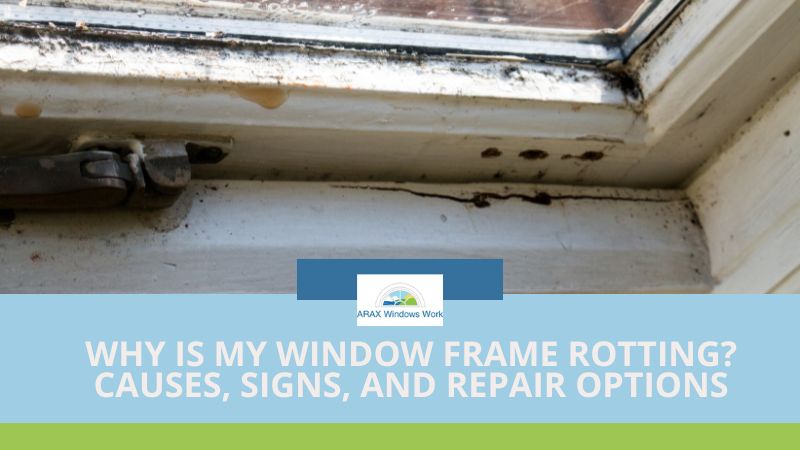
- Texture and paint. Healthy wood is firm; rotting wood turns soft or spongy and gives when you press it. If a screwdriver sinks into the frame with light pressure, you’ve found decay. Cracked, bubbling, or peeling paint usually means moisture is trapped underneath and the wood beneath is already wet.
- Discoloration and smell. Mold or mildew (often green, black, or gray) thrives in the same damp conditions that cause rot, and a musty, earthy odor near the window is a strong sign that decay is active even before you can see it.
- Function and structure. A window that’s suddenly hard to open or close may have swollen wood that’s absorbed water and expanded. In more advanced cases, you’ll see the wood crumbling, flaking, or looking pitted and stringy. Because insects like carpenter ants and termites are drawn to soft, moist wood, unexplained insect activity around a window is also worth a closer look.
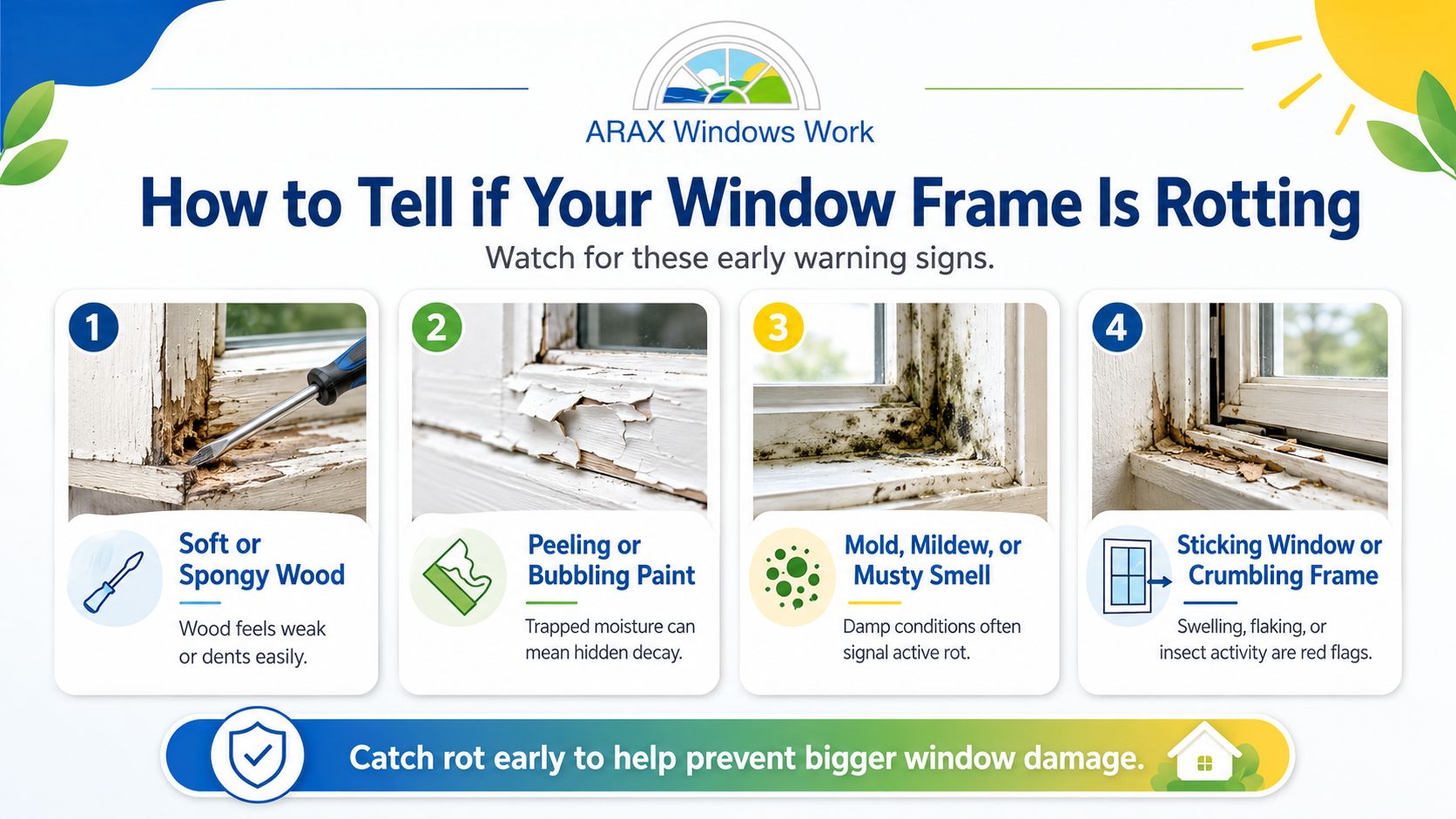
If you spot any of these, it’s worth having someone check before the damage gets deeper. Arax specializes in wood window rot repair and can tell you quickly whether it’s a surface fix or something more. Request a free estimate.
Which Window Frame Materials Actually Rot?
Rot is a wood problem, so the frame material determines whether it’s a risk at all.
| Material | Can it rot? | Maintenance needed |
|---|---|---|
| Wood | Yes | High (regular painting/caulking) |
| Vinyl | No | Low |
| Fiberglass | No | Low |
| Aluminum | No (can corrode) | Low |
| Composite | Rarely | Low |
Wood is the only material that truly rots, and it’s also the one that rewards upkeep with decades of life. Vinyl and fiberglass don’t rot and need very little maintenance, though neither matches the look of real wood on an older or historic home. Aluminum won’t rot but can corrode in damp conditions. Composite frames (wood fibers bound in resin or plastic) resist decay far better than solid wood and only rarely develop problems.
None of this makes wood a bad choice. Well-maintained wood windows can hold up for decades, which is why so many homeowners repair rather than replace them. Wood just needs attention the other materials don’t.
Can a Rotten Window Frame Be Repaired?
In most cases, yes, and repair is usually the smarter option. Whether it makes sense comes down to how far the decay has spread.
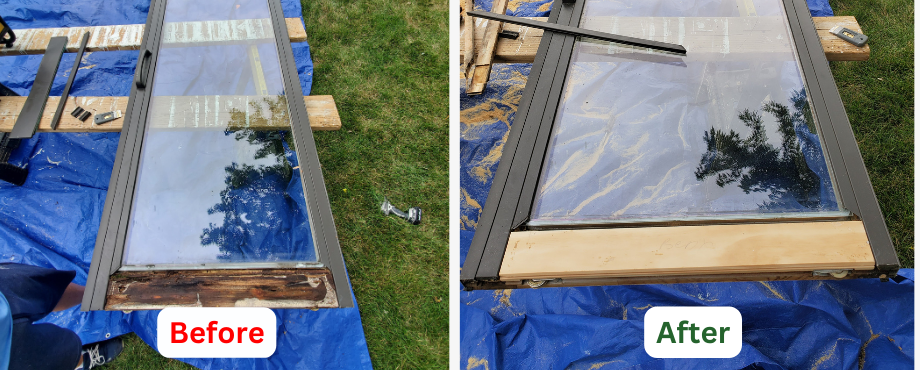
- Minor surface rot (shallow, limited to the outer layer) is the easiest to handle: the affected wood is removed, treated, and filled, and the frame is often as good as new.
- Moderate rot that’s gone deeper but hasn’t compromised the frame’s structure can still be repaired by cutting out the decayed section, reinforcing what remains, and rebuilding with epoxy or matching wood.
- Severe structural rot (decay that’s eaten through load-bearing parts of the frame or spread into the sash and jamb) is the case where repair may no longer be reliable, and replacing the affected components (or the window) becomes the better call.
Replacement tends to make sense when the rot is extensive, when the same window has been repaired repeatedly, or when the window is old and inefficient enough that a newer unit pays for itself anyway. A professional inspection is the fastest way to know which camp your window falls into.
How Professionals Repair Window Frame Rot
A proper rot repair is more than filler smeared over a soft spot. Here’s the process, done right:
- Full inspection. A technician checks the sash, sill, jamb, and surrounding trim, not just the obvious damage, to map the full extent of the rot, including parts you can’t see.
- Moisture detection. A moisture meter finds where the wood is still wet and traces the water back to its source. There’s no point repairing rot if the leak that caused it is still active.
- Removal of damaged wood. All soft, decayed material is cut and scraped away down to solid wood, because any rot left behind keeps spreading under the repair.
- Wood hardener. This liquid soaks into the fibers at the repair’s edges and cures hard, stabilizing wood that’s sound but slightly softened so the repair has something solid to bond to.
- Epoxy filler or wood splicing. A two-part structural epoxy is molded and shaped to match the original profile, then sanded, drilled, and painted like real wood, and it won’t rot. Larger gaps get a spliced-in piece of matching wood instead.
- Full section replacement, when damage is too deep: a sill, part of a sash, or a length of molding is cut out and rebuilt with new wood milled to match.
- Finishing. The repair is sanded flush, primed to seal bare and repaired wood, painted to match, and the joints are re-caulked to close the gaps where water got in to begin with. That last step is what keeps the rot from coming back.
When Does the Entire Window Need Replacement?
Repair handles most cases, but there’s a point where rebuilding a window costs more than it’s worth.
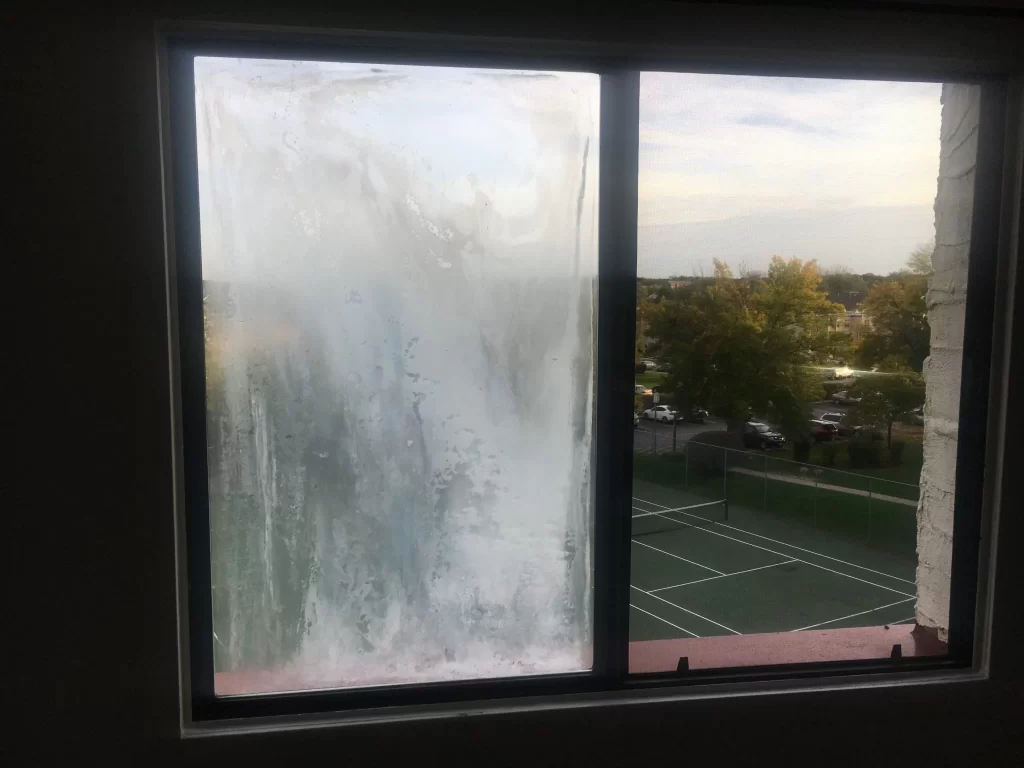
Replacement is worth considering when rot has spread from the frame into the sash, or when the structural parts of the window can no longer bear a load or hold the glass securely. A failed insulated glass unit (where the seal between panes has broken, leaving the glass permanently foggy) is another factor, though foggy glass alone can often be fixed with foggy window repair rather than a whole new window.
Also consider replacement if you’ve repaired the same window several times, or if water has already traveled past the frame into the surrounding wall. And if the window is decades old and drafty, replacing it can pay off in energy savings on top of solving the rot. A repair company should tell you honestly when you’ve crossed that line rather than patch a window that’s beyond saving.
Can Window Frame Rot Spread?
Yes, and that’s the reason not to ignore it. The fungi that cause rot move into any damp wood or organic material they can reach.
Left alone, rot can travel from the window frame into the wall framing behind it, the studs and headers that hold up that part of the house. From there, moisture soaks into drywall, which crumbles and stains, and into wall insulation, which loses its effectiveness once wet. Persistent dampness feeds mold growth inside the wall cavity, a health concern as much as a building one. In the worst cases, water works its way down to flooring near the window and into the structural bones of the house.
That progression, from a soft sill to compromised framing, is exactly how a small repair becomes a major renovation, and it’s why the moisture-detection step in a professional repair matters so much. Stop the water source and you stop the spread.
How to Prevent Window Frame Rot
Preventing rot is far cheaper than fixing it, and most of it comes down to keeping water off the wood while letting the wood dry.
- Check caulking once a year and reseal any spot that’s cracked, shrunk, or pulled away from the frame.
- Repaint or re-stain wood windows every few years, before the finish wears thin. That coating is the wood’s main defense against moisture.
- Keep gutters clean so water doesn’t overflow onto the windows below, and inspect flashing around each window for gaps or damage.
- Keep weep holes at the bottom of the frame clear of dirt and debris so trapped water can drain.
- Run exhaust fans and manage indoor humidity to cut down on condensation on the glass.
- Fix any leak the moment you notice it rather than waiting for a convenient time.
- Trim back bushes and shrubs planted close to the house so air can circulate and frames dry out after rain.
- Schedule an inspection every spring and fall so small decay gets caught early.
Does Homeowners Insurance Cover Window Rot?
Usually, no. Rot is typically classified as the result of neglect, deferred maintenance, or ordinary aging, none of which standard homeowners policies pay for. Insurers expect routine upkeep like caulking, painting, and prompt leak repairs, and they treat slow decay as a maintenance issue rather than sudden damage.
There are exceptions. If the rot resulted from a covered event, such as storm damage that breached the window, a tree falling on the house, or a sudden, accidental water intrusion like a burst pipe, your policy may cover the repair. The distinction insurers draw is sudden and accidental versus gradual and preventable.
Coverage depends heavily on your specific policy and the cause, so check your declarations page and talk to your insurer before assuming anything. This is general information, not insurance advice, and it isn’t a determination of your particular claim.
Repair vs. Replacement: How to Decide
A few factors are worth weighing before you default to either option:
- Age of the window: a newer window is usually worth repairing; a very old one might be due for an upgrade anyway.
- Extent of the rot: surface and moderate decay repair well; deep structural rot may not.
- Energy efficiency: an old, single-pane, drafty window gives you a reason to replace beyond just the rot.
- Cost comparison: weigh repair cost against full replacement, including labor and materials for both.
- Future maintenance: a repaired wood window still needs ongoing upkeep that a new low-maintenance unit wouldn’t.
For most homeowners with sound windows and localized rot, repair is the better first option. It costs a fraction of replacement, preserves the look of the original windows (which matters on older and historic homes), and a good repair with epoxy and fresh sealant can hold up for years. Replacement is the right call when the window is beyond saving or old enough that a new one pays for itself in efficiency alone.
Frequently Asked Questions
Can rotten window frames be repaired?
Most can. Minor and moderate rot is repaired by removing the decayed wood, treating the surrounding area with hardener, and rebuilding the missing wood with structural epoxy or a spliced-in piece. Only severe structural rot that’s spread into the sash or jamb typically calls for replacement.
Is window rot dangerous?
It can be. Beyond weakening the window itself, rot can spread into wall framing and insulation and create damp conditions that grow mold, a health concern. It rarely poses immediate danger, but it gets more serious, and more expensive, the longer it’s left.
How long does window frame repair take?
A straightforward rot repair on a single window is often done in a day, including drying and curing time for the epoxy and finish. Larger jobs or multiple windows take longer, but wood repairs are usually much faster than a full replacement.
Can I paint over rotten wood?
No. Painting over rot only hides it while decay continues underneath, and paint won’t adhere properly to soft, damp wood. The rotten material has to be removed and the wood repaired first, then primed and painted.
How much does window frame repair cost?
It depends on the extent of the rot and how many windows are involved, but repair is almost always cheaper than replacement. A small surface repair and a full sill rebuild are very different jobs, so a free estimate is the fastest way to get a real number.
Does vinyl window framing rot?
No. Vinyl doesn’t absorb water and doesn’t feed the fungi that cause rot. Vinyl frames can still develop other issues, like seal failure or warping, just not rot.
What happens if window rot is ignored?
It spreads: from the frame into the sash, then potentially into wall framing, drywall, and insulation, with a risk of mold and structural damage. A small, cheap repair becomes a large, expensive one.
Can mold grow from rotten window frames?
Yes. The same damp conditions that cause rot also support mold and mildew, which often grow right alongside the decay on and around a rotting frame, one more reason to address rot promptly.
How often should windows be inspected?
Twice a year is a good rule: once in spring, once in fall. A quick check of the caulk, paint, and wood, with a screwdriver probe of any suspicious spots, catches most problems early.
Should I replace all my windows if one frame is rotten?
Not necessarily. Rot is usually localized to specific windows exposed to more water, so you can repair or replace only the affected ones. Replacing every window at once is a choice about cost and efficiency, not something the rot itself requires.
Get a Free Wood Window Rot Estimate
Window frame rot almost always traces back to wood that stayed wet too long, whether from a failed seal, a hidden leak, or years of condensation. Find the water, and you’ve found the cause.

Catching it early keeps the repair inexpensive. A soft spot caught this spring is a minor fix; the same spot ignored for years can spread into your walls and cost thousands.
Not sure which side of that line your windows are on? Arax Windows Work offers free wood window rot inspections and repair in Addison, IL and the surrounding suburbs. Call (815) 230-1890 or contact us online before a small problem gets bigger.