

Last Updated on November 21, 2026
By Ivan, Lead Window Repair Technician and Co-Owner at Arax Windows Work, with 10+ years repairing windows in the Chicago suburbs.
Your sliding window is probably hard to open because there is dirt in the track, the rollers have worn flat, or the track is dry. Most of these can be fixed in 20-30 minutes by cleaning the track out and then applying some silicone or dry PTFE lubricant. If the window still drags, then you may have a bent track, worn/broken rollers, or the frame has shifted out of square and needs repair.
A good slider window will slide open with one hand and almost no effort. Here is a quick guide on how to figure out what is wrong by the way the window is acting, things you can safely do to try and fix it yourself, and when you should call a technician.
Why Your Sliding Window Is Hard to Open
When a sliding window is hard to open, it’s usually either because something is blocking the sash from moving along the track, or because the window frame has changed shape. Here are the top 8 things we find, starting with the one you want to eliminate first.
The Lock Is Not Fully Released
This one sounds obvious, but you’d be surprised how many “stuck” windows are actually caused by a lock that is not fully released. This could be a latch that is only partially open, a secondary lock on the bottom of the sash, a vent stop, or a security pin/bar in the track that is keeping the window shut no matter how hard you pull.
Dirt, Debris, and Dead Bugs in the Track
The bottom track of a sliding window is a trough that collects dust, pollen, pet hair, sand, pieces of leaves, dead bugs, etc. All this grit builds up in the channel and under the rollers, causing the sash to drag instead of glide. This is the most common cause and the easiest to fix.
A Dry Track or Wrong Lubricant
Sliding windows and their rollers need a thin film of lubricant to move well. Over time, that lubricant film can wear off, leaving you with vinyl on vinyl or metal on metal. Also, if someone used oil or grease on the track years ago, it can become a sticky paste that attracts dirt.
Worn or Broken Rollers
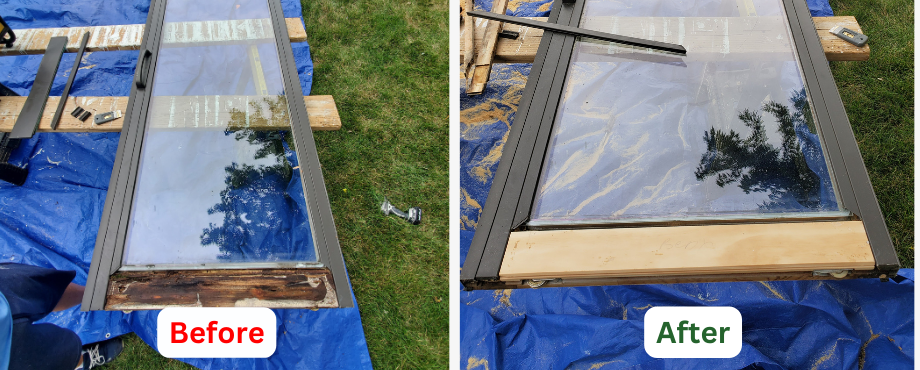
Many sliding windows have small nylon or steel rollers built into the bottom of the sash. Over time, these can flatten, crack, rust, or even seize up. When you have bad rollers, you may feel like the window is gritty or bumpy as it moves along the track, or the window might drop on one corner and scrape as it moves.
Bent or Damaged Track
Aluminum and vinyl tracks are easily dented. If you step on the sill, drop a tool, or force a sticky sash over the years, you can end up with a pinched or bent rail. When this happens, the window will move normally, but then suddenly stop hard at the same spot every time.
Paint or Caulk Sealing the Sash
If the window was recently painted or caulked, the sash may be glued to the frame. Even a thin bead of dried paint along the joint can lock the window in place. This is more common with older wood sliders or windows that stay shut all winter.
Frame or Sash Warping from Heat or Moisture
Vinyl expands in direct sunlight, and wood can swell as it absorbs moisture. Either can cause the fit to tighten to the point where the sash starts binding. If the window moves fine on a cool morning, but sticks on a hot afternoon, or sticks after a week of rain, this is likely the cause. If the wood stays swollen, you might start seeing some rot.
House Settling and Pulling the Frame Out of Square
Houses settle. As the foundation settles or framing shifts, the window opening can start to rack out of being a rectangle to a slight parallelogram. This causes the sash to pinch on one corner. Look for uneven gaps around the sash, a lock that doesn’t line up anymore, or new cracks in the drywall near the window.
Why Sliding Windows Stick More in Chicago Winters
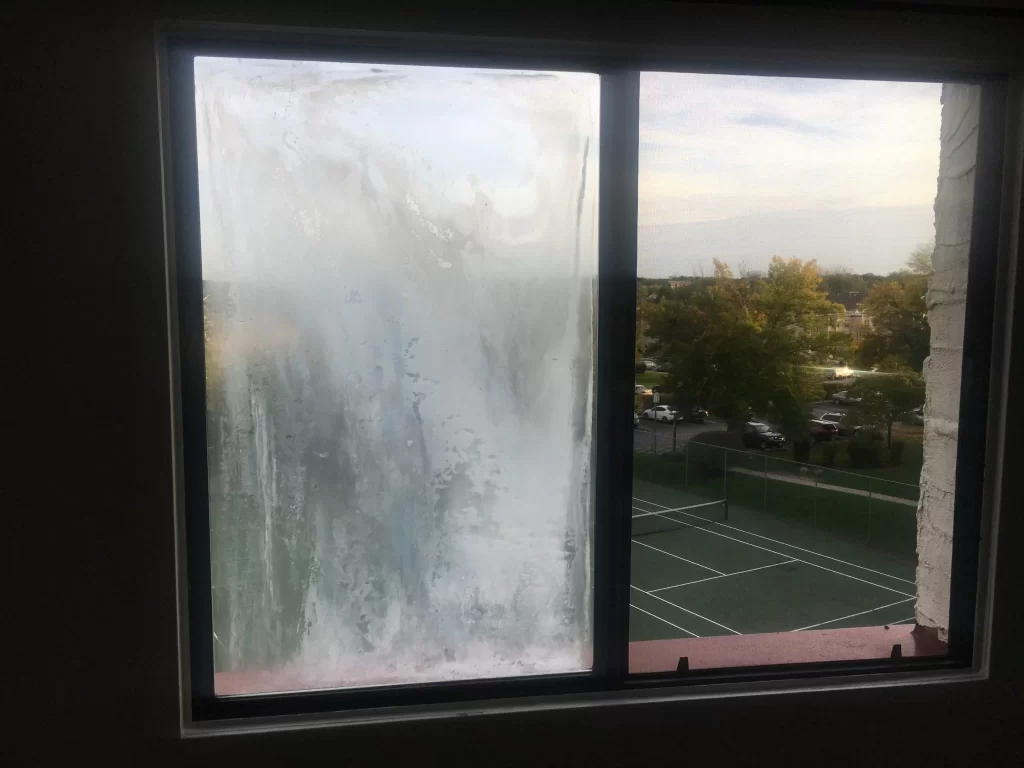
In Northern Illinois, we have an issue in the winter that you won’t often find in the national DIY guides. Warm, humid indoor air condenses on cold glass, runs down into the bottom track, and freezes overnight. If you have clogged weep holes (on the outside edge of the track) from fall leaves and grit, the water can’t drain. By January, you could have a sash that is frozen shut into the track.
To fix this, let the room warm up or use a hair dryer on a low setting, moving it around and keeping it a few inches away from the glass until the ice lets go. Don’t use boiling water or a heat gun. You could crack cold glass with a sudden temperature change, and a heat gun can warp vinyl in seconds. The real fix is to make sure you clear the weep holes every fall and keep your indoor humidity reasonable so less water collects in the first place.
Also, the repeated freeze/thaw cycle will cause vinyl and aluminum to expand and contract throughout the winter. This can cause weatherstripping to loosen, and can cause a slightly out-of-square frame to get even more out of line. If you notice your window getting a little harder to open every spring, you might want to get it checked out before it stops moving altogether.
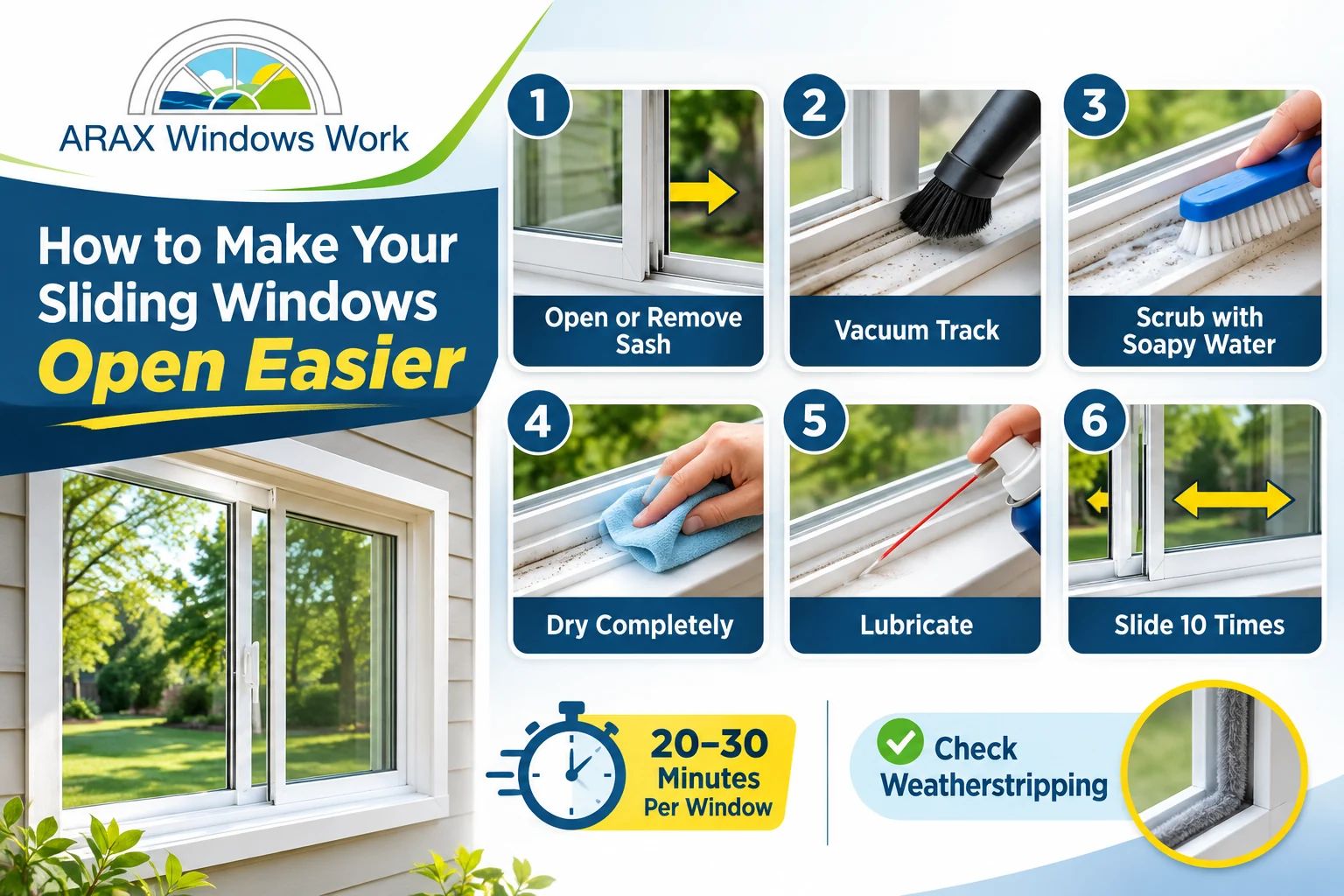
How to Make Your Sliding Windows Open Easier
Most of the time, you can get a sliding window moving smoothly again by thoroughly cleaning the track, letting it dry, and then applying a thin coat of silicone or dry PTFE lubricant. Plan on spending 20-30 minutes per window.
- Open the window as far as it can go. If the sash is easy to lift out, take it out and set it on a towel so you can get to the whole track and rollers.
- Vacuum the track. Use a brush attachment or a crevice tool to get out any loose dirt, bugs, and debris. You can use an old toothbrush to get loose any dirt that is packed in the corners.
- Scrub with soapy water. Mix a few drops of dish soap with warm water and scrub the channel with a stiff nylon brush. You can use a putty knife wrapped in a rag to clean out the corners. While you are at it, make sure you clear the weep holes on the outside edge of the track.
- Dry it completely. Wipe down the track with a clean rag or paper towels, then let it air dry for a few minutes. Lubricant won’t stick to a wet track.
- Lubricate. Spray a light coat of silicone or dry PTFE lubricant along the track and onto the rollers. Then, wipe off the excess.
- Work the sash back and forth. Slide the window fully open and closed about 10 times to spread the lubricant around.
Also, make sure you check the weatherstripping. This is the fuzzy pile or rubber seal along the edges of the sash. It can get torn, bunched up, or come loose and jam between the sash and the frame. If you have loose sections, you can press them back into their channel. If they are flattened or torn, you’ll need to replace them. Worn weatherstripping can also let in drafts, so even if it’s not the cause of the sticking window, you might want to fix it.
What’s the Best Lubricant for Sliding Windows?
The best lubricant for sliding windows is a silicone spray or a dry PTFE (Teflon) lubricant. These leave a slick film that dries to the touch so dust won’t stick to it. Both are safe to use on vinyl, aluminum, and wood tracks.
You want to avoid using things like household oil, lithium grease, petroleum jelly, and cooking spray. These will feel smooth for a week or two, but then they’ll start collecting dirt and create that same gummy buildup you just cleaned out. Petroleum-based products can also break down some types of vinyl and rubber over time.
Original WD-40 is a bit of a different story. WD-40 is a solvent and water displacer, so it will cut through old grime and can be used to free up a stuck roller. But, it will evaporate, and won’t protect the track for long. You can use it for cleaning if you want, but then wipe it out and use silicone or PTFE.
As with any product, less is more. Just spray a short burst into the track or onto a rag and wipe off the excess. Try not to get any overspray on the glass or floor. Silicone can be hard to remove from glass and makes hard floors slippery.
How to Open a Stuck Sliding Window
If the window won’t budge, you can try these steps in order. Stop if it still won’t move.
- Make sure it’s unlocked. Check the main latch. Then, look for a second lock, a vent stop, or a security bar/pin in the track.
- Score any paint/caulk. Use a sharp utility knife to run along the seam where the sash meets the frame. Do this on the inside and outside. 2-3 light passes are better than one deep cut.
- Clean and lubricate. Vacuum out what you can reach of the track. Then, spray silicone lubricant along the track and into the gap under the sash. Let it sit for a few minutes to work in.
- Lift the sash slightly as you slide it. Grab the sash on both sides, lift it up a fraction of an inch to take the weight off the rollers, and then push it sideways. If it moves when you do this, you might have a problem with a roller or the track.
- Gently tap the frame. Hold a wood block against the edge of the sash frame. Then, tap the block with a rubber mallet. Work your way up and down the edge. Don’t hit the sash directly, and don’t tap on or near the glass.
Safety note: Don’t force it. Sliding sashes are lightly built. If you try to pry with a screwdriver, yank on the handle, or hit the frame hard, you could crack the glass, snap the latch, or pull the sash out of square. Make sure you wear gloves and safety glasses when you are doing this. If the window still won’t move after doing these things, then leave it alone and have it looked at.
When to Call a Pro for a Stuck Sliding Window
If you have thoroughly cleaned and lubricated the window, and it’s still hard to open, you likely have a part that is failing or the frame has shifted. You should call a technician if you have worn/broken rollers, a bent/dented/cracked track, a sash that has come off the track and won’t go back on, or a broken lock/latch. Also, if you have a cracked or rotted frame, you should call a tech. At that point, you’re looking at either repair or replacement.
For most of these issues, you’ll be looking at a repair, not a new window. On most sliders, you can replace parts like rollers, tracks, locks, and glass for a lot less than the cost of a new window. If the frame itself is failing, then it’s usually more cost-effective to replace the window. A technician can tell you which one you’re looking at.
At Arax Windows Work, we repair sliding windows in homes and businesses all over the Chicago suburbs. If you still have a hard-to-open window, you can check out our window repair services in Addison, Illinois or call us for a free estimate at (815) 230-1890.
FAQs for Sliding Windows
Can I replace the rollers on a sliding window myself?
You can replace the rollers on many sliding windows, as long as you are comfortable lifting the sash out. Open the window partway, lift the sash up into the top track, and then swing the bottom toward you. The rollers are in the bottom rail. They’re held in place by a screw or a clip. The tricky part is finding the exact replacement. The roller assemblies can be different depending on the brand and age of the window, so take the old one with you when you go shopping. If you have a large sash, they can be heavy and awkward to handle. So, you might want to get a second person to help, or leave it to a window hardware repair technician.
Why does my sliding window get stuck in summer?
Heat and humidity. Vinyl and aluminum expand in direct sunlight. Wood sashes can swell as they absorb moisture from humid air. Both of these can cause the fit between the sash and the frame to tighten up. If the window only sticks in summer, and then frees up in cooler weather, you’re likely seeing expansion. Cleaning and lubricating the track can help. If the sticking gets worse every year, you might want to have the frame checked out.
Why is my sliding window frozen shut in winter?
The warm, humid indoor air condenses on the cold glass. It then runs down into the bottom track and freezes overnight. If you have clogged weep holes (on the outside edge of the track), it’s even worse because the water can’t drain. You can let the room warm up or use a hair dryer on a low setting, moving it around and keeping it a few inches away from the glass, until the ice lets go. Don’t pour hot water on it or use a heat gun. You could crack the cold glass with a sudden temperature change.
How often should I clean and lubricate sliding window tracks?
For most homes, twice a year is sufficient. You want to do it in the spring to clear out any grit from the winter. Then, you want to do it again in the fall so you can make sure the weep holes are clear before the first freeze. You might want to do it more often if you live near a busy road or construction, or if the window is open most of the summer.
Can I use WD-40 on sliding windows?
You can use it for cleaning, but it’s not a long-term lubricant. Original WD-40 is a solvent and water displacer. It will cut through old grime and can be used to free up a stuck roller. But, it will evaporate, and the thin residue it leaves will attract dust. You can use it for cleaning if you want, but then wipe it out and use silicone or PTFE instead. WD-40 also makes a silicone lubricant in their Specialist line that is appropriate for window tracks.