

Last Updated on June 12, 2026
If your home feels colder than it should, or your heating bill has crept up with no clear reason, drafty windows are often the cause. According to the U.S. Department of Energy, heat gain and heat loss through windows account for 25 to 30 percent of residential heating and cooling energy use. Fixing window drafts, whether with a simple DIY repair or professional service, is one of the most effective ways to improve comfort and cut energy costs.
Key Energy Stats (U.S. Department of Energy)
- Heat loss through windows: 25-30% of residential heating and cooling energy use
- Sealing drafts can reduce annual energy costs by 5% to 30%
- Storm windows can minimize heat loss by 25% to 50%
- About 30% of a home’s heating energy is lost through windows
Minor drafts around a single window can often be handled with the right materials and a bit of time. When drafts are affecting multiple windows or getting worse over time, it’s worth having a professional take a look to find the real source of the problem.
What Causes Window Drafts?
Window drafts develop when a window can no longer seal properly against outside air. The gap might be visible or invisible, but the effect is the same: cold air in winter, warm air in summer, and a heating and cooling system working harder than it needs to. Here are the three most common causes.
Improper Installation
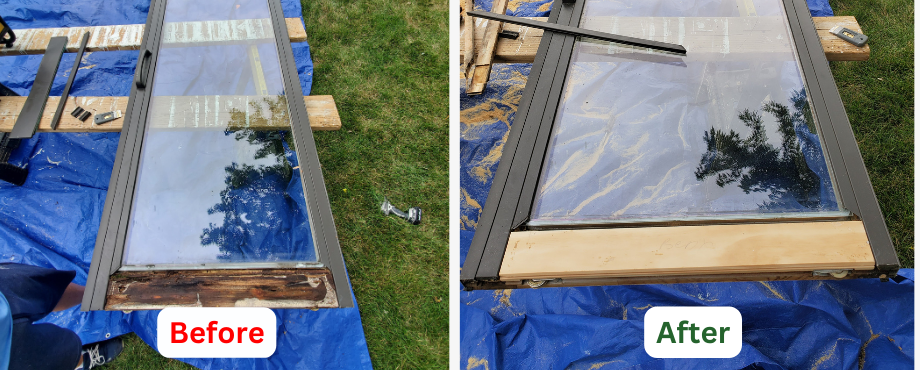
A window that was not properly aligned or secured during installation will never seal the way it should. Gaps can form at the frame, the sill, or the edges where the window meets the wall. Over time, those gaps tend to grow. Poor installation also puts extra stress on the window, which can cause weatherstripping and seals to fail ahead of schedule. If you suspect your window was not installed correctly, a professional inspection is the right first step.
Damaged or Failing Window Seals
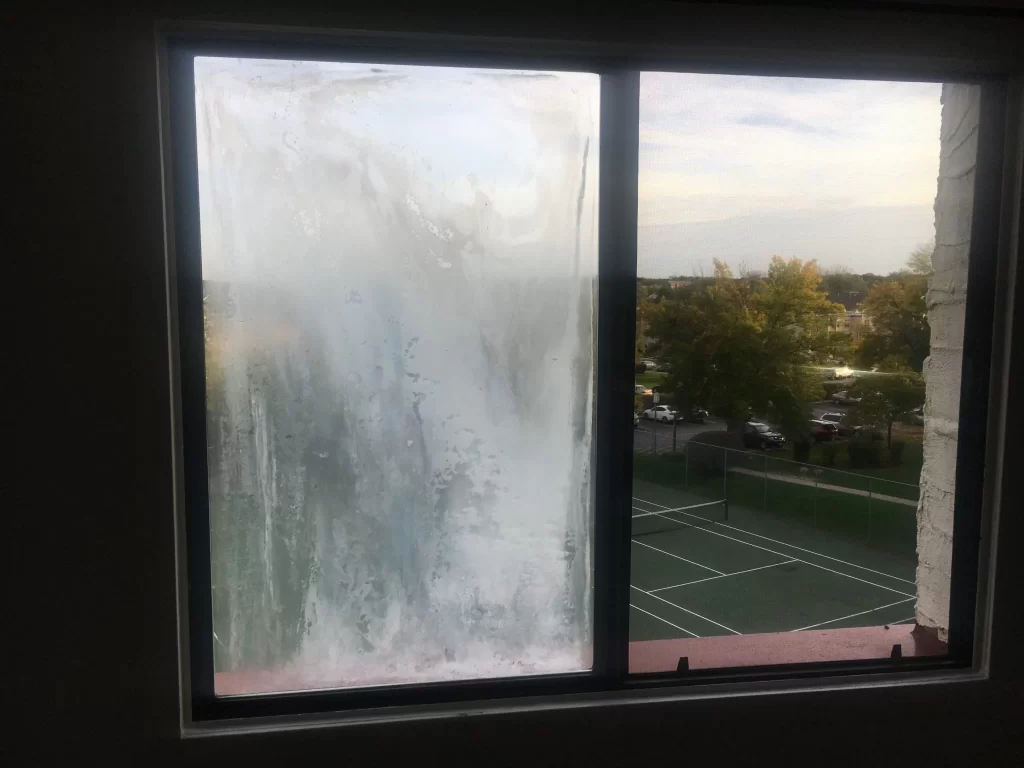
Modern energy-efficient windows use double or triple panes of glass with insulating gas sealed between them. When that seal breaks, the gas escapes, the insulating value drops, and outside air gets in. The most obvious sign of seal failure is condensation or foggy film between the glass panes. Seal failure can result from aging, manufacturing defects, or prolonged weather exposure. Depending on how severe the damage is, the window may need professional repair or full replacement.
Warped or Cracked Window Frames
Window frames expand and contract with temperature and humidity changes throughout the year. Over time, this cycle can cause certain frame materials to warp, crack, or pull away from the surrounding wall. Even a small gap is enough to let air in steadily, and the problem typically gets worse if left alone. This is particularly common in older homes or in climates with harsh winters and hot summers.
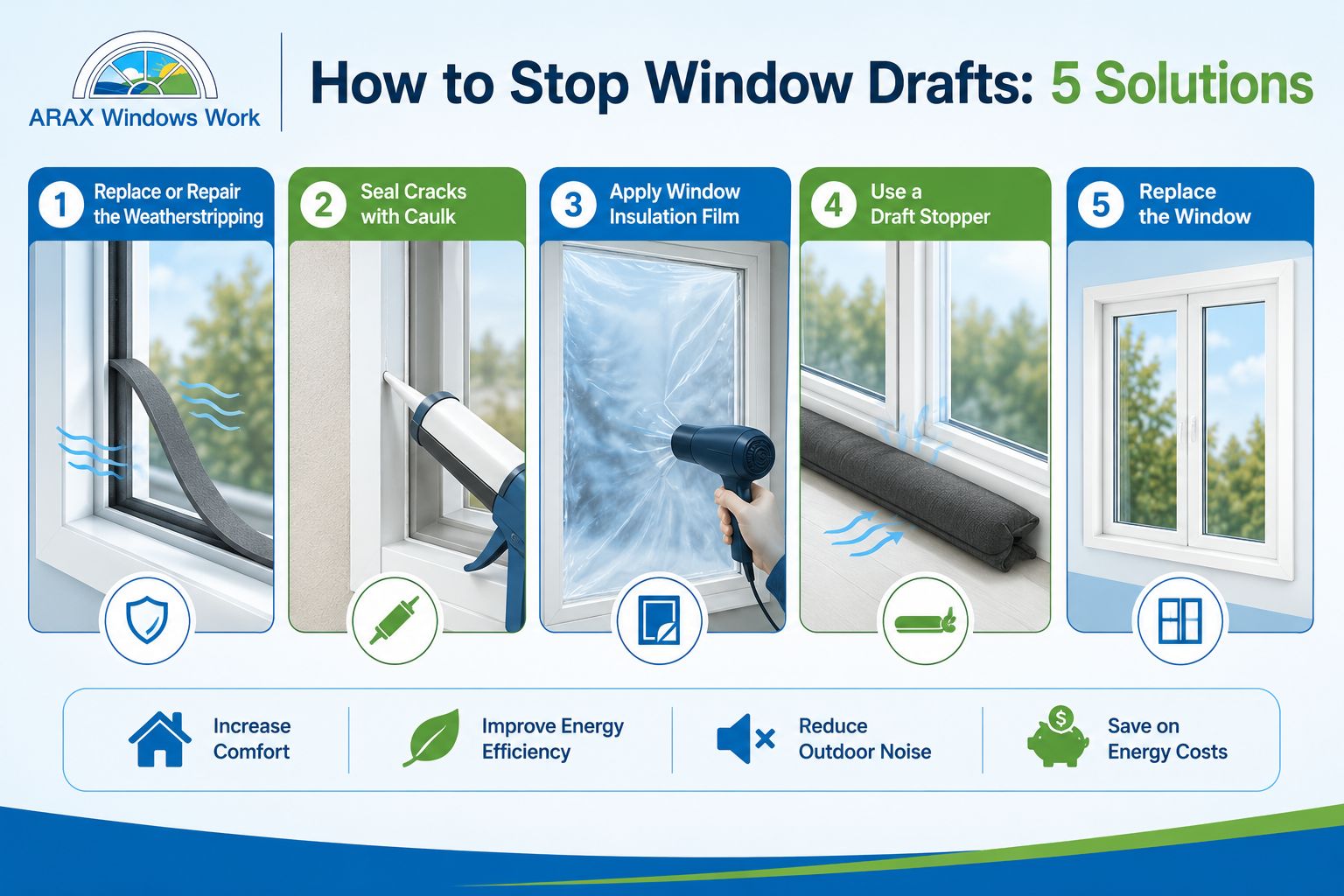
How to Stop Window Drafts: 5 Solutions
The right fix depends on how serious the problem is. Here are the most effective options, from quick DIY repairs to permanent solutions
1. Replace or Repair the Weatherstripping
Weatherstripping runs along the edges of the window sash and frame to create a tight seal when the window is closed. It wears down over time, and a gap or crack in the weatherstripping is one of the most common causes of drafts. Inspect the weatherstripping by running your hand around the closed window frame on a cold day. If you feel air movement, damaged weatherstripping is likely the issue. Replacement is usually affordable and straightforward, and it can make a noticeable difference on moderately drafty windows.
2. Seal Cracks with Caulk
Small gaps and cracks in the window frame or around the trim can let in a surprising amount of air. Caulk is an easy, inexpensive fix that works well on these openings. Apply it along any visible gaps between the window frame and the wall, and inspect the exterior as well. For very small hairline cracks, clear nail polish can act as a temporary patch. Caulk will require reapplication over time as the material expands and contracts, but it holds up well in most conditions.
3. Apply Window Insulation Film
Window insulation film creates an additional barrier over the glass and frame, reducing airflow and improving thermal performance during colder months. It is one of the more effective short-term solutions for drafts caused by poor insulation in older windows. The film does prevent normal window use once applied and needs to be removed in warmer weather, so it works best as a seasonal fix rather than a permanent one.
4. Use a Draft Stopper
Draft stoppers, sometimes called draft snakes, are insulated fabric tubes placed along the bottom of a window to block airflow at the sill. They are inexpensive, easy to reposition, and a practical option for windows with significant gaps at the base. They are a temporary measure, not a structural fix, and need to be moved whenever the window is opened.
5. Replace the Window
If drafts persist after repairs, or if the window has structural damage, warped framing, or failed seals that cannot be corrected, replacement is usually the most cost-effective long-term option. Modern ENERGY STAR-certified windows can save homeowners an average of 7 to 15 percent on annual household energy bills, and the payback period on window replacement runs roughly 5 to 7 years in most climates based on energy savings alone. Professional installation is strongly recommended to avoid the same issues that caused the original problem.
When Should You Call a Professional Window Repair Company?
DIY repairs work well for minor drafts caused by worn weatherstripping or small gaps around the frame. Call a professional when:
- Drafts are affecting multiple windows throughout the home
- You see condensation or fogging between the glass panes, which signals a failed seal
- The window frame appears warped, cracked, or pulling away from the wall
- The window no longer opens, closes, or locks properly
- You have already tried weatherstripping or caulk and the draft has not improved
In these cases, a professional window inspection can identify whether repair or replacement is the better path, and prevent the problem from causing moisture damage or further energy loss.
Frequently Asked Questions
Whether you’re dealing with a minor chill near the sill or a full-on cold blast in the middle of winter, these answers cover the most common window draft questions we hear from homeowners.
How do I stop cold air from seeping through a window?
The most effective way to stop cold air seeping through a window is to identify the source first. Run your hand around the closed window on a cold day to locate where the air is entering. If the draft is around the edge of the sash, the weatherstripping is likely worn or compressed and needs to be replaced. If the gap is between the window frame and the wall, apply exterior-grade caulk to seal it. For drafts coming through the glass area, window insulation film creates an additional thermal barrier that reduces airflow. A draft stopper placed along the bottom of the window provides a fast temporary fix while you address the underlying problem. If cold air is still getting in after replacing the weatherstripping and sealing visible gaps, the window may have a broken seal between the panes or a structural issue with the frame that requires a professional to diagnose and repair properly.
Why are my windows drafty even when they are closed?
Windows can feel drafty when fully closed for several reasons. The most common is deteriorated weatherstripping, the foam or rubber seal around the sash that compresses over time and stops blocking airflow effectively. Another frequent cause is a failed insulating seal between the glass panes, which allows outside air to move through the window assembly. This is usually accompanied by condensation or a cloudy film trapped between the panes. Warped or cracked window frames are also a common culprit, particularly in older homes, because the frame can pull slightly away from the wall and create gaps that allow air to pass through even when the window is fully latched. Poor original installation can produce the same result. Start by inspecting the weatherstripping and frame from inside and outside, then check for any visible fogging between the glass. Each of these issues has a different fix, and identifying the specific cause saves time and money.
Can drafty windows really increase energy bills?
Yes, and the impact is often larger than homeowners expect. The U.S. Department of Energy reports that heat gain and loss through windows account for 25 to 30 percent of residential heating and cooling energy use. When windows are drafty, your HVAC system has to run longer and work harder to maintain a set temperature, which shows up directly in your utility bills. According to energy efficiency data, sealing drafts can reduce annual energy costs by 5 to 30 percent depending on the severity of the air leakage and how well the gaps are sealed. Homes with multiple drafty windows or older single-pane glass tend to see the most significant savings after repairs or replacement. If your heating or cooling costs have increased gradually over several years without a clear explanation, drafty windows are one of the first things worth investigating.
What can I put on windows to stop drafts?
The right product depends on where the draft is coming from. For gaps around the edge of the sash where it meets the frame, weatherstripping is the most effective fix. It comes in foam, rubber, and V-strip varieties, and replacing worn weatherstripping is one of the highest-impact repairs for a drafty window. For gaps between the window frame and the surrounding wall, exterior-grade silicone or acrylic caulk seals the opening and holds up well through seasonal temperature changes. For drafts caused by poor insulation in older glass, window insulation film stretched across the interior of the frame creates a dead air pocket that reduces heat transfer noticeably. Draft stoppers are useful for blocking airflow at the bottom of a window sill as a temporary or seasonal measure. Thermal curtains add a layer of insulation as well and are worth using in rooms with older windows that you are not ready to replace. For persistent drafts that return after these fixes, the problem usually requires a professional assessment.
When should I replace drafty windows instead of repairing them?
Repair makes sense when the problem is isolated, such as worn weatherstripping, a small gap in the caulk, or a minor frame crack. These are relatively inexpensive fixes that can restore a window to working condition if the structure is otherwise sound. Replacement becomes the better option when the window has a failed insulating seal between the glass panes, which cannot be repaired without replacing the glass unit entirely. Significant frame warping, rotting wood, or cracking that affects the structural integrity of the frame also points toward replacement rather than repeated repairs. If you have already replaced the weatherstripping and caulked visible gaps and drafts are still present, that is usually a sign the problem is structural. From a cost perspective, modern ENERGY STAR-certified windows can save 7 to 15 percent on annual household energy bills, and replacement windows typically pay back their cost within 5 to 7 years in colder climates through energy savings alone. A professional inspection can help you weigh repair costs versus replacement savings for your specific situation.
Are window drafts worse in winter?
Window drafts tend to feel more severe in winter because the temperature difference between the inside and outside of your home is at its greatest, which creates stronger pressure driving cold air through gaps. A small crack or gap that goes unnoticed in mild weather can feel like a noticeable cold stream in January. That said, drafts are a year-round problem. In summer, the same gaps allow warm, humid air to enter, forcing your air conditioning to work harder to compensate. This can be harder to detect because warm air entering a cool room is less obvious than a cold draft in winter, but the energy cost is just as real. The U.S. Department of Energy notes that heat gain through windows is a significant contributor to cooling loads in summer, accounting for a meaningful portion of residential energy use year-round. If you notice a draft in winter, address it before the following summer and you will see the benefit on both your heating and cooling bills.
How do I find the source of a window draft?
Start with your hand. On a cold day, close the window fully and slowly move your palm around the entire perimeter of the frame, the corners, the sill, and along the sash edges where the window meets the frame. Air movement is usually easiest to feel at the corners and along the bottom. If you cannot feel anything clearly, hold a lit candle or incense stick a few inches from the window and watch the smoke. Any draft will pull or push the smoke visibly, even from gaps too small to feel by hand.
Work around the full frame systematically rather than checking just one spot. Once you have identified that a draft exists, narrow down the source:
- If the air is coming from the edge of the sash, the weatherstripping is the likely culprit.
- If it is coming from where the frame meets the wall, the caulk has failed or was never applied properly.
- If the draft seems to come through the glass itself or from between the panes, that points to a thermal performance failure in the glass unit rather than a gap in the frame.
Professional Window Repair Services from Arax Windows Work in Buffalo Grove Illinois
Drafty windows are not always a quick fix, and the longer the problem is left unaddressed, the more it costs in energy bills and potential moisture damage. At Arax Windows Work, we provide professional window repair services in Buffalo Grove, IL and the surrounding area. We inspect and repair all types of residential windows, including issues with seals, weatherstripping, frames, and installation. If your windows are letting in drafts or showing signs of wear, contact us today to schedule an inspection and find out what needs to be done.