

Last Updated on July 7, 2026
After a bad storm, the routine is predictable. Check the roof. Walk the yard. Take a look at the car. Windows get about ten seconds and a pass if the glass is still in one piece. That ten seconds is how storm damage turns into a $3,000 repair six months later. Wind and hail can compromise a window without breaking it. The glass holds while the seal, the frame, the glazing, or the hardware absorbs damage that shows up slowly: a draft in January, fog between panes you cannot wipe away, a window that sticks or will not lock. By then, the storm is months old and an insurance claim is an uphill fight. This guide covers what to actually inspect right after a storm, how to separate cosmetic damage from structural damage, what most homeowners overlook entirely, and when a professional needs to see it before you decide everything is fine.
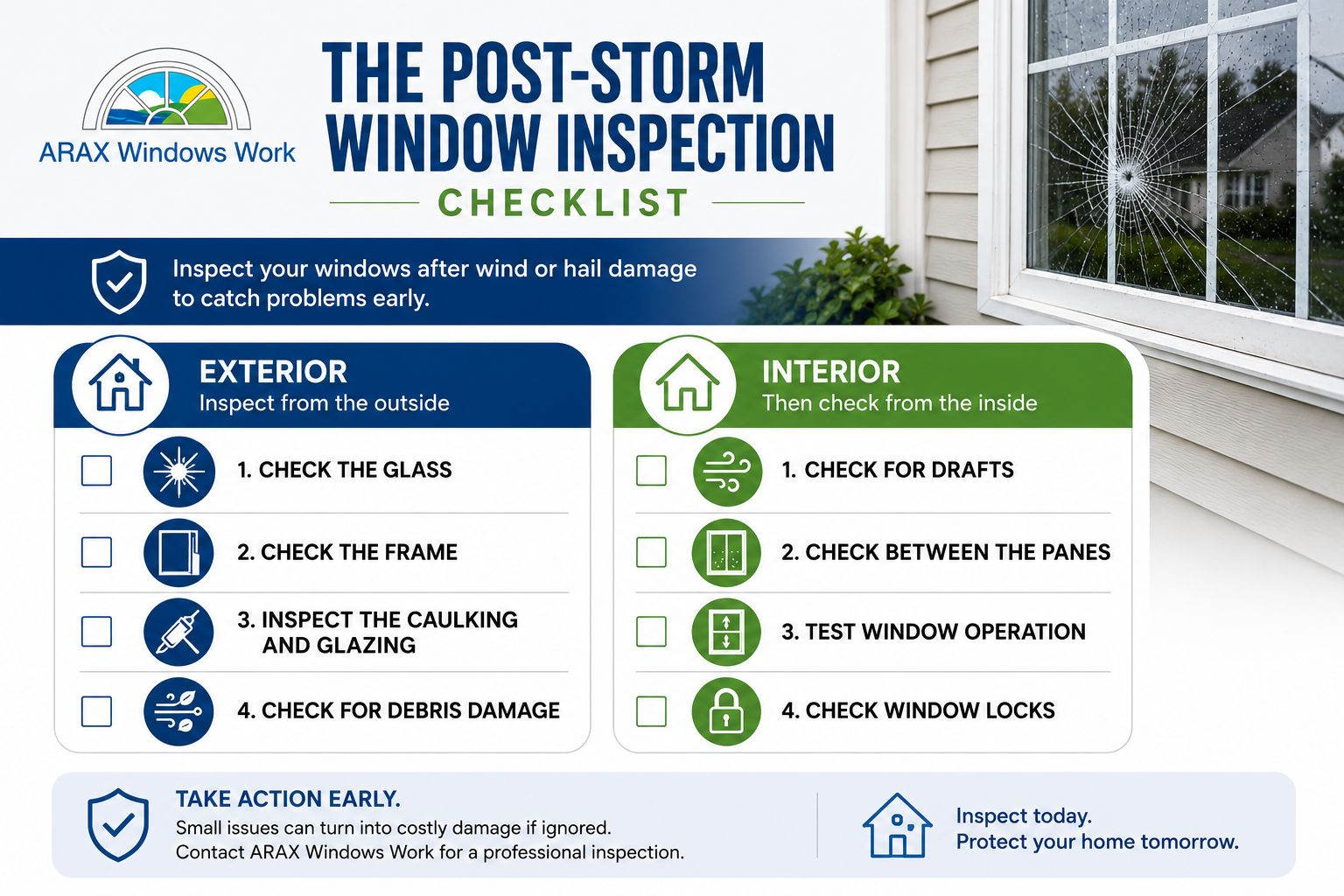
Inspect Your Windows From the Outside After a Storm
Give yourself 20 to 30 minutes while the storm is still fresh. You want to inspect when the evidence is clearest, before debris gets moved or weather changes the picture.
Look at the Glass First
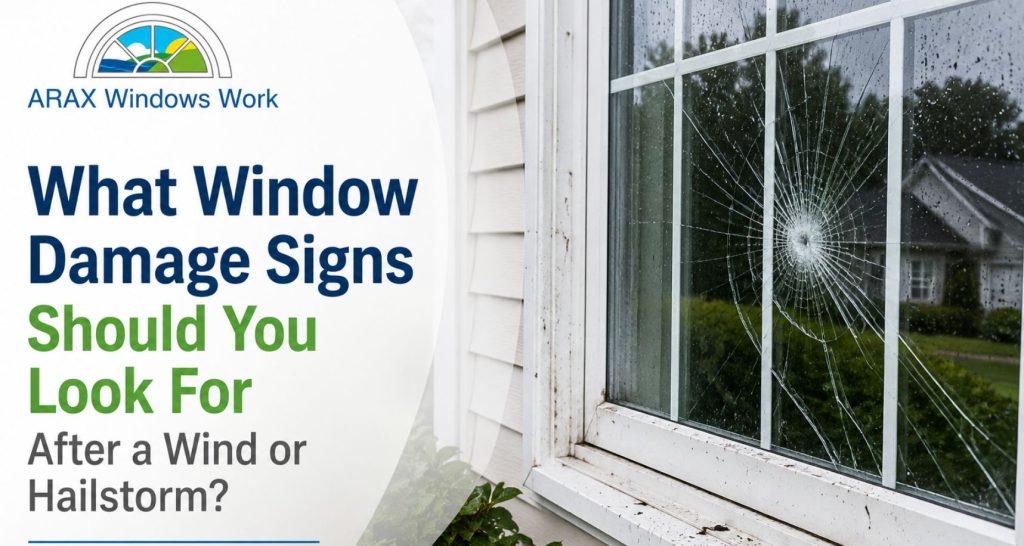
Obvious cracks, chips, and spiderweb fractures are easy to spot. But look closer for something most homeowners miss: small impact points that have not cracked yet. Hailstones leave circular impact marks on glass that look like small frosted spots. The glass holds its shape but is now structurally weakened. Thermal stress, a temperature change, or the next storm can finish what the hail started.
Check each pane from an angle, not straight-on. Sidelighting, meaning looking across the glass surface rather than through it, reveals surface damage that disappears when you look at it head-on.
Check the Frame Before Anything Else
Window frames take a beating in hailstorms and the damage is often dismissed as purely cosmetic. It is not. Dents in aluminum frames can shift the channel that holds the glass, putting uneven pressure on the seal. Vinyl frames can crack or warp in the same storm. Wood frames exposed to windblown rain for hours can begin absorbing moisture at the joints.
Run your hand along the frame edges. Feel for raised edges, soft spots in wood, or any area where the frame no longer sits flush against the wall. If the frame shifted even slightly out of square, the window will have trouble sealing properly going forward.
Inspect the Caulking and Glazing
The thin bead of caulk or glazing compound around each pane is what keeps wind and water from getting between the glass and the frame. After a severe storm, check whether it has pulled away, cracked, or gone missing in sections. This is common on older windows and on any window that took a direct hit from debris.
Missing or cracked caulking will not announce itself with water pouring in. It allows slow moisture infiltration that shows up as staining, soft drywall, or mold weeks later.
How to Inspect Your Windows From the Inside After a Storm
Once you have done the outside walk, go through the house and check every window from the inside. Inside inspection catches problems the exterior cannot show you.
Check for Drafts with Your Hand
Hold your hand near the window seal, the meeting rail (where the two sashes meet), and around the entire frame perimeter. On a windy day, even a small gap is easy to feel. If there is no wind, light a candle and hold it near the edges. Flickering where there should be no airflow means the window is no longer airtight. A draft that was not there before the storm is almost always storm-related. Do not assume it will go away on its own.
Check Between the Panes
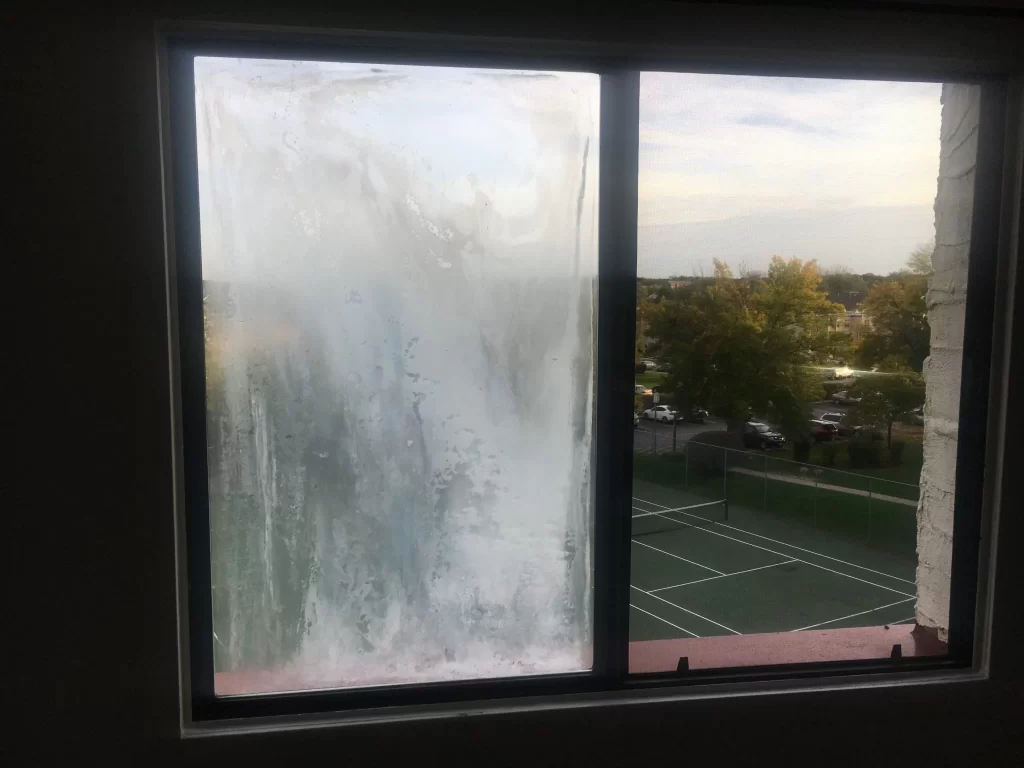
Fogging between the glass panes, the kind you cannot wipe off from either side, is a sign that the insulated glass unit (IGU) seal has failed. This can happen during a storm because of rapid temperature and pressure changes. Hail impact on the frame can transfer enough force to crack the seal even if the glass itself stays whole. You may not see fogging immediately. It can take days or weeks to appear after seal failure because humidity levels inside the sealed unit need to build up. Check the windows again two weeks after the storm, not just the day after.
Test Every Window’s Operation
Open and close every window that experienced the storm. You are checking for windows that stick, bind, or no longer lock fully. A window that worked fine before the storm and now requires force to close has likely had its frame shifted. A lock that will not engage fully is a security issue on top of a weather issue. On double-hung windows, check both sashes independently. The top sash is often forgotten because it rarely gets opened, but it is just as exposed to storm damage.
A window that does not lock properly after a storm is not just a repair issue. It is a security issue. Do not leave it and come back to it next month
The Damage Most Homeowners Completely Miss
Weep Hole Blockage
Weep holes are small openings at the bottom of window frames designed to drain water that gets past the exterior seal. In a hailstorm, debris, granules from roof shingles, and dirt can pack these holes shut. Once blocked, water that enters the frame has nowhere to go and sits against the frame and sill. Find your weep holes (they look like small slots or round holes at the frame base) and clear them with a toothpick or small wire. This takes two minutes and prevents weeks of moisture damage.
Screen Damage as a Damage Indicator
Window screens have no structural role but they are an excellent indicator of storm severity. If a screen is dented, torn, or has visible impact pockmarks, the window behind it took that same storm. Use screen damage as a flag: any window with a damaged screen deserves a thorough inspection of the glass and frame, not just a quick look. Hail that tears through a screen is hail that was large enough and fast enough to do real damage. The screen absorbed some of that force, but not all of it.
Surrounding Damage Patterns
Look at what is next to your windows. Siding dented or chipped at window height tells you hail was hitting that entire area with force. Trim pieces with impact marks, flashing that has lifted, or paint that has been stripped from the frame exterior are all indicators that the window itself needs close inspection even if it looks superficially fine. Insurance adjusters are trained to look for this surrounding damage as evidence. If you document it during your initial inspection, it strengthens any claim you need to file.
How to Tell the Difference: Cosmetic vs. Structural Damage
After a storm, it is easy to either panic at every dent or wave off damage that actually matters. The distinction between cosmetic and structural damage tells you exactly which category you are dealing with and what it means for your timeline and your wallet.
Cosmetic damage only:
- Small surface chips on the frame exterior with no penetration through the material
- Screen damage with no corresponding glass or frame impact
- Light scratches on glass that do not penetrate the surface coating
- Minor paint scuffs on the exterior frame
Structural damage that needs professional attention:
- Any crack in the glass, regardless of size
- Visible frame deformation or bowing
- Caulking or glazing that has separated from the frame
- Fogging between panes that cannot be wiped away
- Draft where there was none before
- Window that sticks, binds, or will not lock
- Water staining or soft spots on the interior sill or surrounding drywall
If you are unsure which category applies, treat it as structural.
The cost of a professional inspection is always lower than the cost of water damage or a failed insurance claim. If you are weighing repair against full replacement after a storm, read our guide on when window repair makes more sense than replacement.
Document This Before You Call Your Insurance Company
Before you contact your insurance company or a window contractor, get your documentation in order. This takes 30 minutes and directly affects how your claim is handled.
- Photograph every affected window from the exterior and interior
- Photograph surrounding damage (siding, trim, screens, roof edges near windows)
- Note the date and time of the storm and any weather service reports confirming hail in your area
- Open and close every window and note which ones show operational issues
- Write down which direction the windows face. South and west-facing windows take the most direct hail exposure
- Check your window manufacturer warranty. Some cover seal failure regardless of storm damage
Do not make temporary repairs that cover the damage before an adjuster has seen it. Boarding a broken window is fine and necessary. Caulking over cracked glazing or repainting a damaged frame before documentation is not.
How Long Do You Have to File a Window Damage Claim After a Storm?
inspect within 24 to 48 hours of the storm, document everything before you touch anything, and file as soon as damage is confirmed. Do not wait until the damage forces your hand. By that point it has already gotten worse and your claim is harder to make. One detail most homeowners miss: if your policy is Replacement Cost Value coverage, your insurer typically pays actual cash value first and releases the remaining depreciation only after repairs are completed and documented. Delay the repairs and you risk forfeiting that second payment entirely.
The best time to inspect after a storm is as soon as it is safe to go outside. The second best time is right now, if you have not done it yet.
Get a Professional Window Inspection and Repairs from Arax Windows Work
Arax Windows Work serves homeowners in Buffalo Grove, Cary, and the surrounding northwest suburbs of Chicago. If your home went through a recent storm and you want a professional set of eyes on your windows before you call your insurance company or ignore it for another season, that is exactly what we do.
We inspect for the damage that is easy to miss: compromised seals, frame shifts, caulking failures, and impact marks that have not cracked yet but will. We document everything clearly so you have what you need for an insurance claim if one is warranted.
Call Arax Windows Work today at (815) 230-1890 to schedule your post-storm inspection and window repair services.
Serving Buffalo Grove, Naperville, Cary, and the Northwest Chicago Suburbs.
Frequently Asked Questions
What actually breaks windows at 70 mph?
Yes, but wind speed alone rarely does it. Here is what actually causes the failure.
- Debris is the main cause. At 70 mph, loose objects become projectiles. A branch, patio furniture, or gravel carries enough force to shatter standard residential glass on impact.
- Wind pressure is second. At 70 mph, wind exerts roughly 12 to 15 pounds of pressure per square foot. Single-pane glass, large picture windows, and frames already weakened by previous damage are most vulnerable.
- Pressure differentials finish the job. Wind hitting one side of the house creates suction on the opposite side. Windows on the low-pressure side can flex outward and fail without taking a direct hit.
- The bigger concern: Glass can stay intact while the seal cracks, the frame shifts, and caulking pulls loose. The window looks fine after the storm. The damage shows up as a draft in January or fogging that will not clear.
Will my insurance company deny my claim if I did temporary repairs first?
Boarding a broken window is fine. Caulking over cracked glazing, repainting a damaged frame, or covering damage before an adjuster documents it can hurt your claim.
Does Homeowners Insurance Cover Window Damage from Wind and Hail?
Wind and hail are covered perils under most standard homeowners insurance policies, but check your specific policy. Coverage depends on your deductible, window condition before the storm, and how quickly you file. Some states carry a separate wind and hail deductible. When in doubt, call your insurer before assuming you are covered.
What are weep holes and why do they matter after a storm?
Weep holes are small slots at the bottom of window frames that drain water. Hail debris and roof granules pack them shut during storms. Blocked weep holes trap water inside the frame leading to rot and moisture damage.
What does hail damage on a window look like?
Small circular frosted impact points on the glass, dents or cracks on the frame, torn screens, and chipped or missing caulking around the pane edges.