

Last Updated on September 23, 2026
Key summary: Many window problems can be repaired without replacing the entire window. Common repairable components include cracked or foggy glass, insulated glass units, wood frames and sills, sashes, cranks, locks, balances, weatherstripping, and screens. Repair is usually a good option when the frame and sash are still structurally sound and the damage is limited to one or two components. Full replacement becomes more appropriate when rot is widespread, the frame is severely warped, structural damage extends beyond the window, or multiple major parts have failed.
A window can have one failed part and still have years of useful life left.
That is an important distinction because homeowners are often told they need a new window when the actual problem may be a broken crank, failed insulated glass unit, worn balance, damaged lock, rotted section of wood, or deteriorated weatherstripping.
Many window problems can be repaired without removing the entire window. The deciding factor is usually the condition of the frame and sash. If those components are still structurally sound, individual parts can often be repaired or replaced.
Even older wood windows can be more repairable than they appear. The National Park Service notes that traditional wood windows were built as systems of individual parts and that broken or deteriorated components can often be repaired rather than requiring removal of the whole window.
So what can actually be fixed?
Which Window Parts Can Usually Be Repaired?
The parts most commonly repaired include:
- Window glass and insulated glass units
- Wood frames
- Wood sills
- Window sash
- Casement cranks and operators
- Locks and latches
- Hinges
- Window balances
- Sash cords
- Weatherstripping
- Glazing
- Window screens
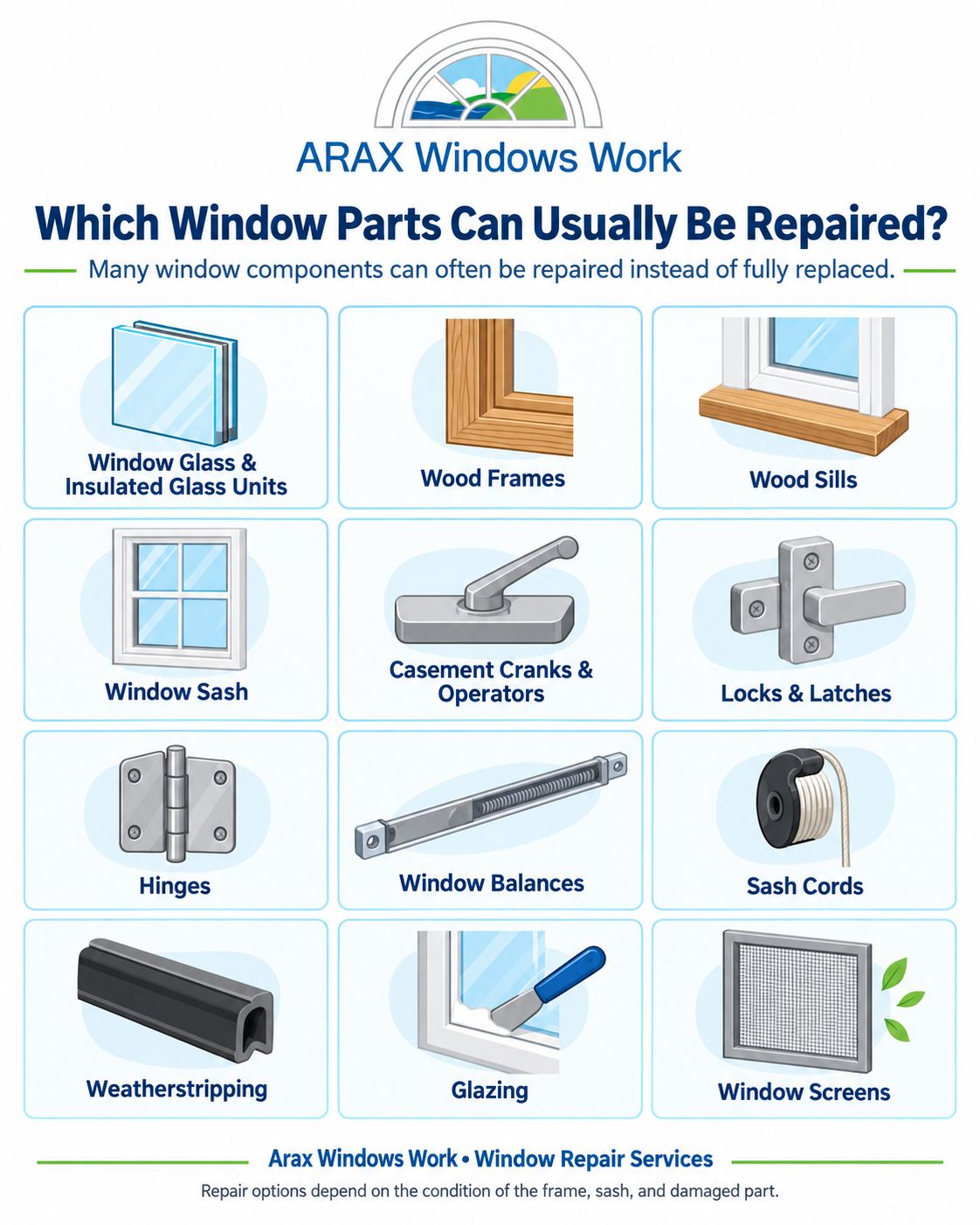
The more important question is whether the damaged part can be separated from the rest of the window without compromising the window’s structure.
For example, a failed double-pane glass unit does not necessarily mean the frame has failed. A bad crank does not mean the casement window needs replacement. A rotted corner of a wood sash does not automatically mean the entire opening has to be removed.
That is why window repair should begin with diagnosis, not with a replacement recommendation.
Can Window Glass Be Replaced Without Replacing the Window?
Yes. Broken, cracked, or failed window glass can often be replaced while keeping the existing frame and sash.
What is replaced depends on the type of window. In a traditional single-pane window, the individual pane of glass can usually be removed and replaced.
In a double-pane or triple-pane window, the glass is generally manufactured as a sealed unit. This is commonly called an insulated glass unit, or IGU. When one pane cracks or the perimeter seal fails, the complete glass unit is typically replaced. The surrounding frame may remain untouched if it is in good condition.
This is especially useful when the window still:
- Opens and closes correctly
- Locks properly
- Sits square in the opening
- Has a solid frame
- Has no widespread rot or structural damage
Replacing glass and replacing a window are two very different projects.
Can Foggy Double-Pane Windows Be Fixed?
Yes. A foggy double-pane window can often be repaired by replacing the failed insulated glass unit instead of replacing the entire window.
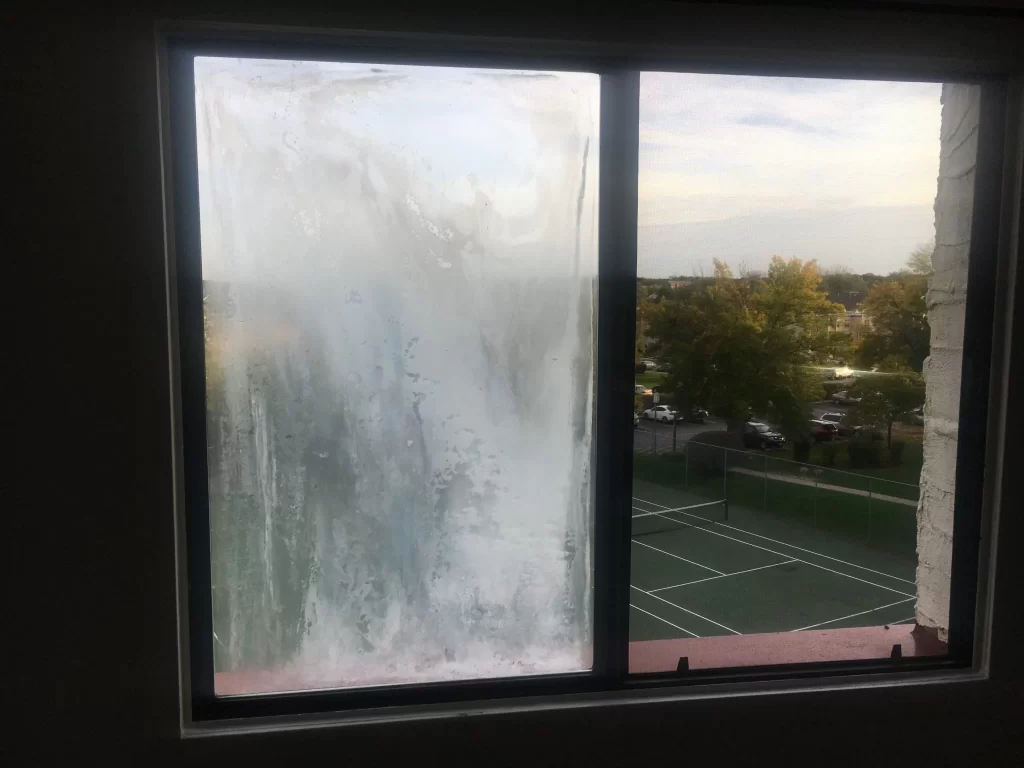
Fog between the panes usually means the seal around the glass unit has failed.
Once that seal fails, outside air and moisture can enter the space between the panes. That is why the haze cannot be cleaned from either side of the window.
You may notice:
- Condensation between the panes
- A cloudy appearance
- Mineral residue
- Streaking inside the glass
- Fog that comes and goes with temperature changes
If the sash and frame remain solid, replacing the insulated glass unit can restore the clear view without disturbing the rest of the window.
A foggy window is therefore primarily a glass-system failure, not automatically a whole-window failure.
Can a Rotted Window Frame Be Repaired?
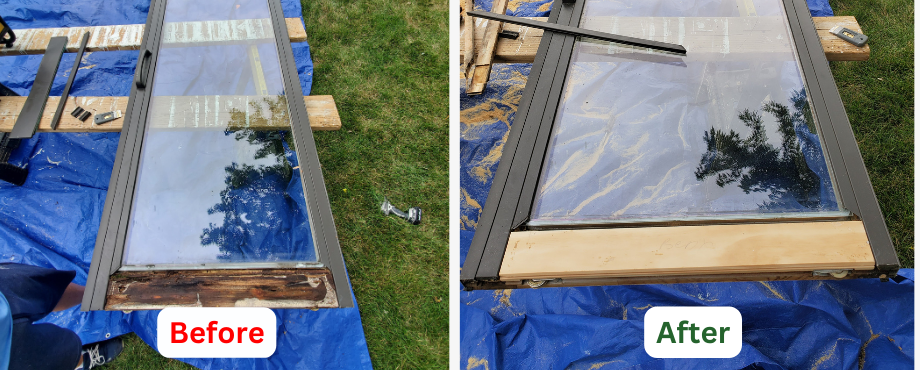
Yes. A rotted window frame can often be repaired when the deterioration is limited and there is enough solid wood remaining to support the window.
Wood rot does not spread evenly. A window may have significant deterioration at one lower corner while the rest of the frame remains solid. Sills, bottom rails, joints, and lower frame sections are particularly vulnerable because they are more likely to remain wet after rain or snow. Repair may involve removing deteriorated wood and rebuilding the damaged section with new wood or an appropriate wood repair system.
If you are noticing soft wood, peeling paint, discoloration, or deterioration around the frame, learn more about the common causes and signs of window frame rot and how the extent of the damage affects the repair.
The National Park Service specifically recognizes repair methods for partially decayed wood windows, including removal of deteriorated material, stabilization, consolidation, patching, and selective replacement.
The condition becomes more difficult when you can press a screwdriver into multiple areas of the frame, the wood has lost its shape, joints are separating, or decay extends into the wall surrounding the window. At that point, replacing a larger section of the frame or the complete window may be necessary.
The Source of the Rot Matters Too
Fixing damaged wood without correcting the moisture problem is incomplete repair.
Rot can develop because of:
- Failed exterior caulk
- Peeling or missing paint
- Poor drainage
- Water collecting on the sill
- Failed glazing
- Exterior trim deterioration
- Improper flashing
- Persistent condensation
A proper repair should address both the damaged wood and the reason it became wet.
Can a Rotted Window Sill Be Repaired?
Yes. A rotted window sill can often be repaired without replacing the entire window.
Sills are among the first parts of a wood window to deteriorate because they receive more direct exposure to water.
The repair depends on how much sound wood remains.
A small deteriorated section may be rebuilt. More extensive damage may require removal and replacement of part or all of the sill.
What matters most is whether the sill still provides solid support for the window above it.
A sill that looks bad on the surface may still be repairable. A sill that feels soft several inches deep or has lost its structural shape requires a much more extensive repair.
Can a Window Sash Be Repaired?
Yes. Many window sashes can be repaired independently of the frame.
The sash is the portion of the window that holds the glass.
Problems involving the sash may include:
- Rotted wood
- Broken glass
- Loose joints
- Failed glazing
- Damaged locks
- Worn weatherstripping
- Failed balance hardware
- Misalignment
With traditional wood windows, the ability to repair individual sash components is one reason these windows can remain serviceable for long periods. National Park Service preservation guidance specifically discusses repairing sash, frames, glazing, hardware, and related window components rather than treating the entire window as disposable.
Can a Broken Window Crank Be Repaired?
Yes. A broken casement window crank can usually be repaired or replaced without replacing the window.
The crank is part of an operator mechanism that pushes the sash outward and pulls it closed.
Several things can cause a casement window to stop working correctly.
The crank handle itself may be stripped. The gears inside the operator may be worn. The operator arm may be bent. Hinges can become stiff or damaged. The sash may also be out of alignment.
This is why replacing only the visible handle does not always solve the problem.
If the handle turns but the sash barely moves, the operator mechanism is often the more likely source of failure.
Can Window Locks Be Repaired?
Yes. Window locks and latches can usually be replaced as individual pieces of hardware.
A lock that no longer engages may be worn or broken, but it is also possible that the sash is no longer sitting correctly in the frame.
Before replacing the lock, check whether the two sides of the locking mechanism still line up.
If they do not, the underlying problem may be:
- Sash movement
- Loose hinges
- Frame movement
- Worn balances
- Warped wood
- Previous improper repairs
Replacing the lock without correcting that alignment problem may only provide a temporary fix.
Why Does My Window Keep Falling Down?
A window that slides downward after you open it usually has a balance problem.
Window balances help support the weight of the sash.
Different windows use different systems, including:
- Block-and-tackle balances
- Spiral balances
- Coil balances
- Sash cords and counterweights
These components wear out over time.
In many cases, the failed balance can be replaced while the original sash, glass, and frame remain in place.
Older double-hung wood windows may use sash cords attached to weights hidden inside the frame. Broken sash cords are also repairable and do not require full window replacement.
Can Drafty Windows Be Repaired?
Yes. Many drafty windows can be repaired, but the source of the air leak has to be identified first.
Not every draft is caused by bad glass.
Air may enter through:
- Worn weatherstripping
- A sash that no longer closes tightly
- Gaps around the frame
- Loose locks
- Deteriorated glazing
- Cracked exterior caulk
- Wood deterioration
One of the easiest diagnostic clues is where you feel the air. If air is entering between the sash and frame, weatherstripping or alignment may be the issue. If air is coming from the perimeter between the window and wall, the problem may involve insulation, caulking, or installation around the opening.
Not sure whether your window is actually leaking air? These simple ways to test for drafty windows can help you identify where outside air may be entering before deciding what needs to be repaired.
Can Window Screens Be Repaired?
Yes. Window screens are usually repairable and can often be fixed without replacing the screen frame.
If the frame remains straight, damaged screen mesh can simply be removed and replaced.
Other individual screen components may also be replaceable, including:
- Screen corners
- Pull tabs
- Springs
- Clips
- Spline
A new screen frame is normally only necessary if the existing frame is badly bent, broken, or missing.
When Is a Window No Longer Worth Repairing?
A window is less likely to be a good repair candidate when the failure involves several major structural components instead of one isolated part.
Full replacement may become more practical when:
- Rot affects most of the frame
- The frame has lost its shape
- The sash and frame are both severely deteriorated
- Water damage extends into the surrounding wall
- The window can no longer be secured safely
- Multiple major parts are unavailable
- Previous repairs have substantially damaged the window
- Repair would require rebuilding most of the unit
A frame that appears bowed, twisted, or out of square also deserves closer inspection. Window frames can change shape because of moisture, installation problems, structural movement, temperature changes, or deterioration. Learn more about what causes window frames to bend and when the problem may be repairable.
This is different from having one bad piece of hardware or one failed glass unit. A useful rule is to look at how much of the original window is still functioning correctly.
If most of it is solid and one component has failed, repair deserves serious consideration. If almost every major component is deteriorated, replacement becomes more reasonable.
Need Window Repair in Buffalo Grove, IL?
If your window is cracked, foggy, drafty, difficult to open, or showing signs of wood rot, Arax Windows can help determine what can be repaired before you consider full replacement.
We provide a wide range of window repair services in Buffalo Grove, IL, and nearby communities, including glass replacement, foggy window repair, wood window restoration, frame and sill repair, crank repair, lock and hardware repair, screen repair, and other common window problems.
Contact Arax Windows today to schedule an inspection and get a free estimate for window repair in Buffalo Grove and the entire Chicagoland area.
Frequently Asked Questions About Window Repair Issues
Can a rotted window frame be repaired?
Yes. A rotted window frame can be repaired when the damaged area is limited and enough solid wood remains to support the window. Small and moderate areas of decay may be removed and rebuilt with replacement wood or appropriate wood repair materials. Extensive rot affecting most of the frame, structural joints, or the surrounding wall may require partial or complete replacement. The moisture source should also be corrected or the wood can deteriorate again.
How big of a window crack can be repaired?
Residential window cracks are generally not permanently repaired based on size. Cracked window glass is usually replaced rather than filled. Even a relatively short crack can continue spreading because window glass expands, contracts, and moves with temperature changes and normal building movement. In a double-pane window, the affected insulated glass unit can often be replaced while keeping the existing sash and frame.
How much does it typically cost to fix a window?
A typical window repair costs a few hundred dollars, although the price varies considerably based on the failed part, glass size, window style, accessibility, and frame material. Angi’s 2026 national cost data reports an average window repair cost of about $405 and a broad range of approximately $70 to $1,700. Simple hardware or screen repairs can fall toward the lower end, while large glass units, extensive wood repairs, and difficult-access windows can cost substantially more.
For that reason, the most useful estimate is based on the actual failed component rather than the number of windows alone.
Are window cracks covered by insurance?
A cracked window may be covered by homeowners insurance when the glass was damaged by a covered event, but ordinary deterioration and maintenance-related failures are generally treated differently. Coverage depends on the cause of the damage, the terms of the individual policy, and the homeowner’s deductible.
For example, sudden storm or impact damage may be treated differently from a window that cracked because of age, long-term deterioration, failed seals, or rotted framing.
Before filing a claim, homeowners should document the damage, determine the likely cause, review their policy, and compare the repair cost with their deductible.